Thank you for calling the Twinge Airlines telephone customer service line. Please choose from one of the following 25 options. For sales, press 1, for billing press 2.....to reach a representative press 25....We are experiencing a high volume of calls at this point in time. Your wait to speak to a representative might be months. Please go to our website and use the friendly self-help database which we are sure will not answer your question..... Annoying music.....All representative are still assisting other customers....You must not have a life, if you are still waiting. Please hang up and call someone else to get the answer.
Welcome to the Future of Self-Service Technology
A grueling airline issue this week led to the question, are we happy with the growing global customer service trend of speaking primarily with computers?
According to a just issued MIT Sloan study, there are substantial differences between management and actual customer perspectives on new self-service technologies:
In a recent post, we analyzed "The $1.2 Trillion Internet of Things Retail Opportunity". As McKinsey pointed out, "retail environments have undergone significant change over the past two decades due to the introduction of information technologies, including the rise of online shopping. The Internet of Things has the potential to cause even greater disruption, but IoT can also provide traditional retailers with the tools to compete - and coexist - with the online retail world as onmichannel shopping erases the distinction between online and offline shops."
For the retail industry, this seems to be the time to discuss trillion dollar opportunities. Order Dynamics just issued an IHL Group study titled "Retailers and the Ghost Economy: $1.75 Trillion Reasons to be Afraid." This week we will look at the $1.75 Trillion worldwide retail missed opportunities from overstocks, out-of-stocks and sales returns.
Total Cost Equates to Increasing Same Store Sales by 11.7%
Emerging Technologies from a Shopper Point of View
This month, First Insight published an interesting study on the evolving in-store technology customer experience and the mindset of the modern consumer.
Following are some surprising shopper insights on the use of technology in retail stores.
Emerging Technologies Challenges
Virtual dressing rooms (where you can see how clothes will look on you without actually trying them on) may be coming to more stores soon. However, when consumers were asked if they would prefer a traditional dressing room versus a virtual dressing room, nearly 60% of respondents preferred a traditional dressing room.
What's "HOT" in Retail Loss Prevention Technologies?
A recent IHL Group research study titled "The Great Disconnect Between LP and IT" summarized that "traditional LP Technologies are (now) being co-opted for
use in other activities leading to influencers of buying decisions that would otherwise be purview of LP only." The convergence of Loss Prevention and Information Technologies has been underway for some time. The pace of change is increasing and further innovative disruption will arrive from unexpected market segments.
"The Great Disconnect Between LP and IT" Key Insights
The data protection aspects of loss prevention dominate LP initiatives. The top five focus areas where retailers spend LP efforts are PCI, data breach, employee theft, returns fraud, and consumer theft. PCI and data breach account for 35% of the focus. Data breach spending is tied with employee theft at 14%. Returns fraud and consumer theft each represent 12% of the overall retailers LP spend focus.
In the recently published McKinsey study "The Internet of Things (IoT): Mapping the Value Beyond the Hype", the retail industry is ranked fourth in highest potential next decade IoT economic impact.
McKinsey defines the retail environment broadly "as physical spaces where consumers engage in commerce—considering or purchasing goods or services. This includes traditional stores, such as department stores and grocery stores, as well as showrooms where goods are on display but not available for sale. It also includes physical spaces where services are purchased, such as bank branches, theaters, and sports arenas. The analysis covers only physical environments where IoT technologies can be deployed, not online retailing."
One of my favorite annual industry reports is AT Kearney's Global Retail Development Index (GRDI). The recently published 2015 edition was titled "Global Retail Expansion: An Unstoppable Force".
The GDRI ranks the top 30 developing countries for retail investment. If you are a global retail leader, it is a must read to navigate opportunities in emerging markets.
Key Insights from the 2015 GDRI Report
China is the number one country in the 2015 GDRI report and it is the only country that has appeared in the top five consistently for the last five years. By 2018, China will surpass the United States as the world's largest retail market. China e-commerce sales grew 50% to nearly $450 billion in 2014, including $150 billion in mobile sales. E-commerce sales are predicted to reach $1 trillion by 2019.
Being passionate about the subject, every year I look forward to the Brand Z Top 100 Global Brands report. 2015 marks the 10th annual edition and over that time period brand value has increased 126% to $3.3 trillion. In the last year alone, brand value has increased 14%.
This week's post summarizes the top 10 apparel, luxury, general retail category trends and extracts key research insights. I will end with some personal observations on the future technology driven evolution of brand value.
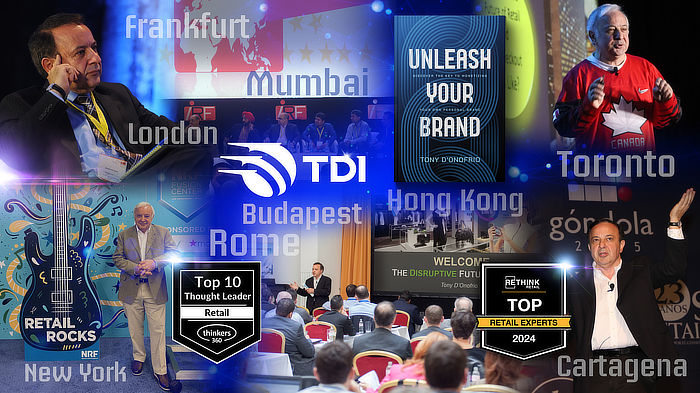
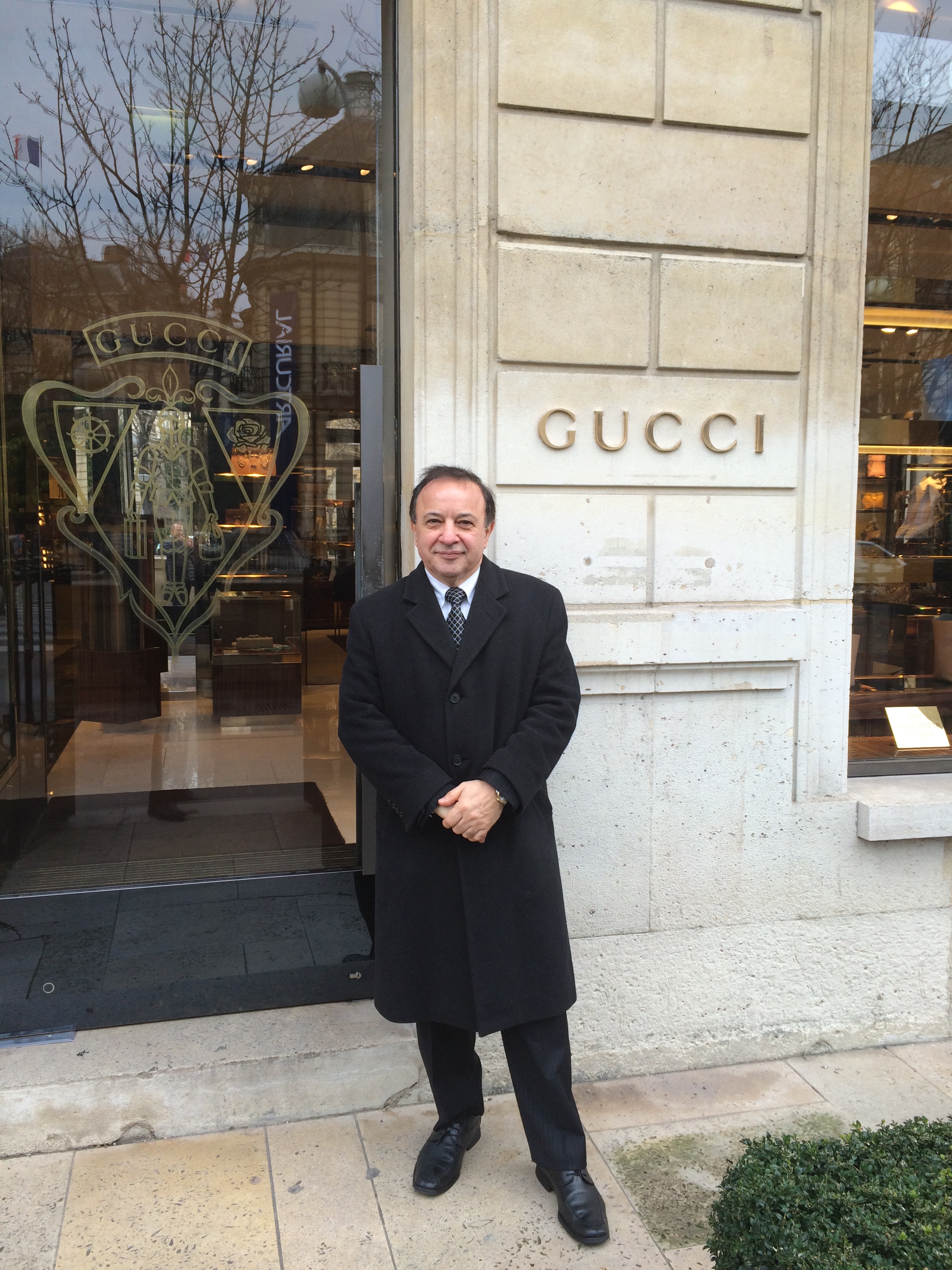
In Rome earlier this month had the pleasure to speak once again to 100+ business leaders from Central, Eastern Europe, Scandinavia, Russia, the Middle East and Africa. Building on the positive response to a similar presentation last year in Budapest, this year's focus was on the latest global retail industry data and hints again at its impact on the future of retail.
"The future will be won by retailers who are bold enough to innovate and adapt and creatively leverage the amazing potential that technology and calculated risk taking will unleash in 2015." - Jeff Roster, Gartner
The 25th Annual Retail Technology Study, which is one of my favorite industry documents, was recently published by RIS News. This year's report was appropriately titled "Retail Transformed: An Inspired Vision to Innovate Differentiate, and Accelerate."
As Joe Skorupa, RIS News Group Editor in Chief, points out, "retailers are going through a transformative phase, the scope of which has not been seen since the first “Retail Technology Study” in 1991. It is pioneering new methods of customer engagement that will explode in the future and building out true cross-channel experiences. These developments are setting the bar high for retailers who need to catch up to fast-moving millennial and omnichannel shoppers who hold the keys to retail’s future."
In this year's report, for me personally, two sections stood out in critical importance for retail in 2015 and beyond.
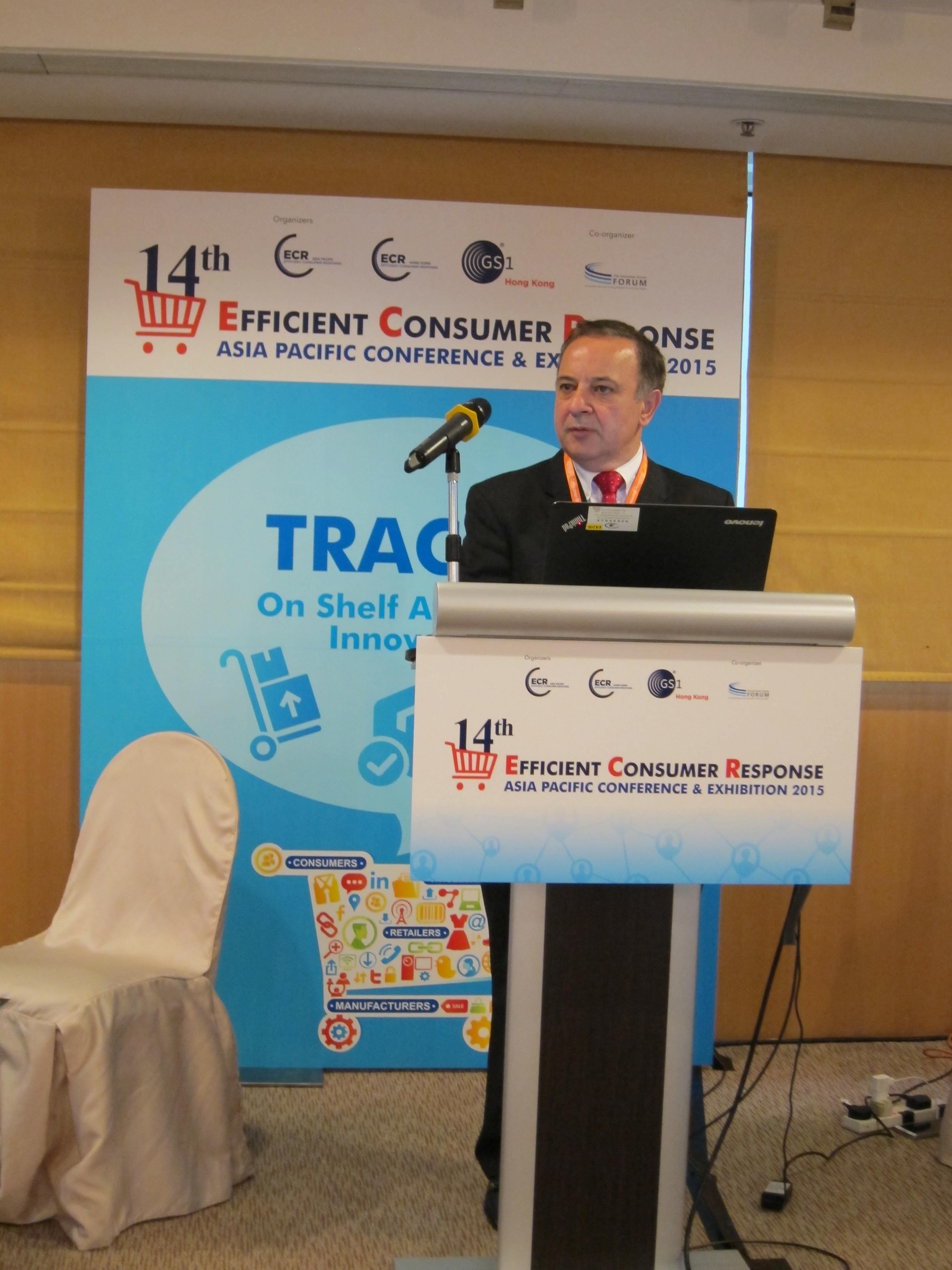
In March, I had the pleasure to speak at the GS1 Hong Kong "14th Efficient Consumer Response Asia Pacific Conference & Exhibition". This post summarizes some of my favorite musings on brick & mortar stores / online sales, Asia consumer trends, Internet of Things, and the Future of Retail.
Brick & Mortar Stores and Online Sales
Supermarket format growth will plateau by 2020 both in Europe and APAC. Most of APAC will skip the hypermarket wave, which is showing decline in early evolution. Hard discounters like Aldi and Lidl are adapting to convenience format and Asia yet to see a hard discounter. Etailing in Asia already ahead of evolved markets like Europe. -Damien Veilleroy, Metro Cash & Carry
APAC traditional trade (unorganized retail) is surviving the onslaught of modern trade by adapting their model. What stayed: close and personal consumer connections, credit services, home delivery, and in-depth knowledge of neighbor. And what's new: close-door set up, focus on hygiene, aisles, more premium products, use of technology, third party support, and aggressive marketing. - Damien Veilleroy, Metro Cash & Carry
Continuing the journey to learn something new, we explore the Matterhorn in Zermatt Switzerland. Believed to be 50 to 60 million years old, this world-famous mountain was formed when the African crashed into the European tectonic plate.
The Matterhorn, in Italian known as Monte Cervino and French as Mont Cervin, is the 10th highest mountain in Switzerland at 14,692 feet (4,478 meters). The summit was first reached on July 14, 1865 by a team led by Edward Whymper. During the descent, four members of the team fell to their death. The Matterhorn is one of the most dangerous mountains to climb in the Alps with over 500 deaths to date.
The Matterhorn first appeared on the famous Toblerone chocolate in 1960. Look closely at the mountain on the packaging and you will see a bear. This is a reference to the city of Bern, where Theodor Tobler first invented the chocolate bar.
The town of Zermatt at the base of the Matterhorn bans cars to preserve the Alpine environment. The Theodul glacier which you can access from Zermatt is located at 3883 meters (12,740 feet) and offers the highest elevation ski area in Europe.
Being in nature is my go-to motivational escape to clear my mind and prioritize life priorities. Mountains are an amazing inspirational mental canvas because their massive scale makes everything around you, including your worries, feel small. The raw beauty and quiet wilderness provide perspective.
Find your special natural wonder. Enjoy its beauty. Remember that you are here for a short time, and what is around you will live on. Take chances. Setbacks are miniscule, compared to the possibilities of reaching your peak life nirvana. In the lyrics from the Sound of Music, "climb every mountain, ford every stream, follow every rainbow, 'till you find your dream"
Confidence in physical retail remains solid this year. More than 55% of survey respondents said they feel confident or very confident about brick-and-mortar performance in 2026, while only around 20% expressed concern. - From Place AI Read more
The Number 1 country continued lead reinforces a broader trend: countries with strong institutions, high trust, and robust social safety nets consistently rank highest in life satisfaction. - From Visual Capitalist


 Thank you for calling the Twinge Airlines telephone customer service line. Please choose from one of the following 25 options. For sales, press 1, for billing press 2.....to reach a representative press 25....We are experiencing a high volume of calls at this point in time. Your wait to speak to a representative might be months. Please go to our website and use the friendly self-help database which we are sure will not answer your question..... Annoying music.....All representative are still assisting other customers....You must not have a life, if you are still waiting. Please hang up and call someone else to get the answer.
  have undergone significant change over the past two decades due to the introduction of information technologies, including the rise of online shopping. The Internet of Things has the potential to cause even greater disruption, but IoT can also provide traditional retailers with the tools to compete - and coexist - with the online retail world as onmichannel shopping erases the distinction between online and offline shops."
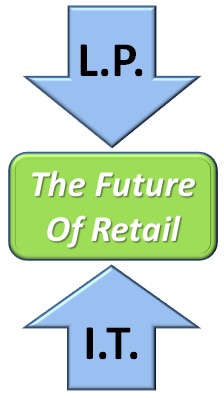 use in other activities leading to influencers of buying decisions that would otherwise be purview of LP only." The convergence of Loss Prevention and Information Technologies has been underway for some time. The pace of change is increasing and further innovative disruption will arrive from unexpected market segments.

 brand value has increased 126% to $3.3 trillion. In the last year alone, brand value has increased 14%.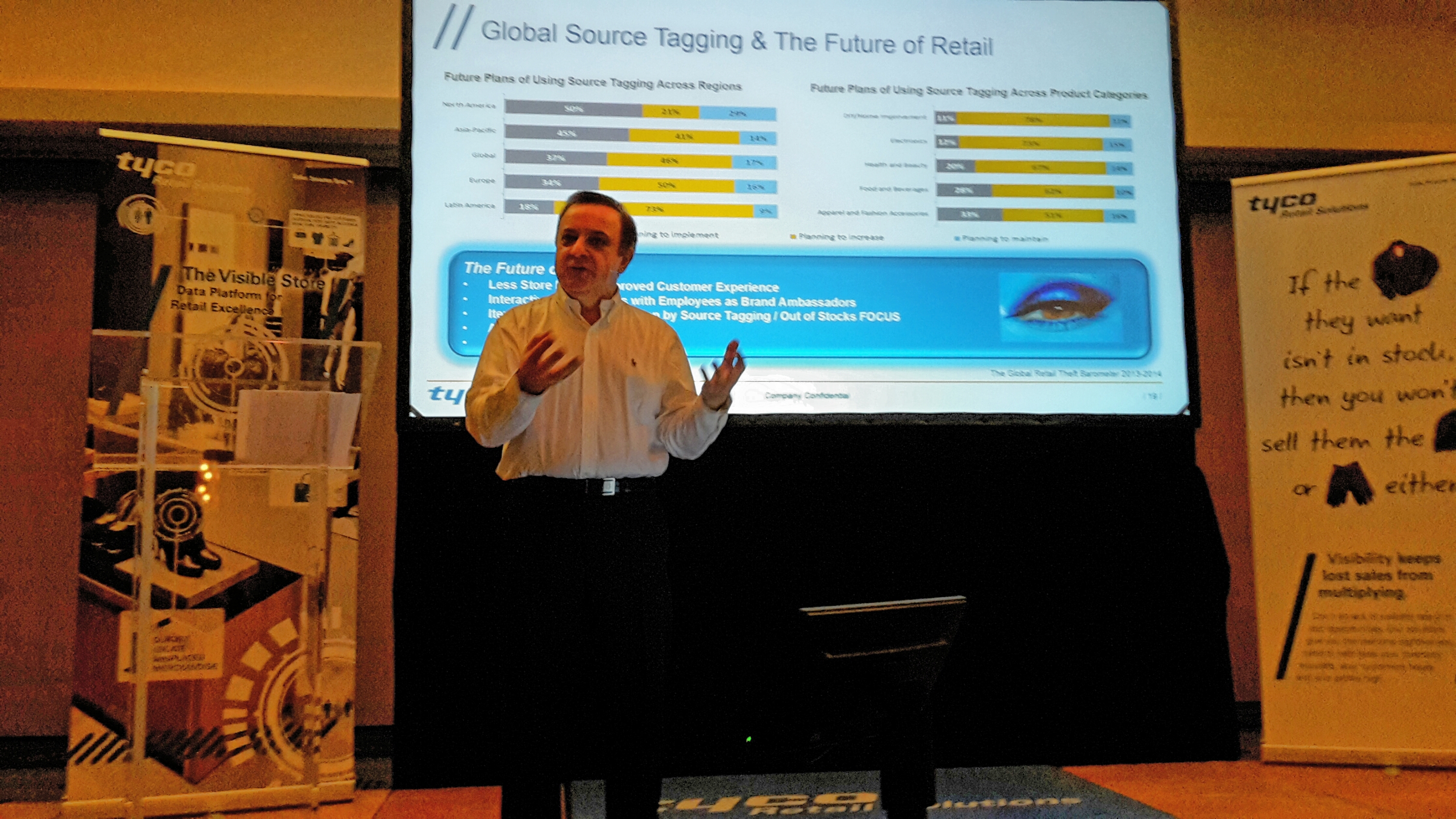
 The 25th Annual Retail Technology
  some of my favorite musings on brick & mortar stores / online sales, Asia consumer trends, Internet of Things, and the Future of Retail.