Last week had a chance to speak to a large audience at the India Retail Forum in Mumbai. Chairing an industry panel discussion, my contributions included an opening presentation to a session titled "8th WONDER IN RETAIL - FUTURE PARADIGMS AND TECHNOLOGIES THAT HAVE THE POWER TO CARRY OUT DISRUPTIVE INNOVATIONS". Summarizing key insights from the opening presentation:
4th Megatrend Reshaping Global Retail
Post World War II, retail has been re-shaped by four megatrends. Technology has been the driver of retail power shifts through each of four megatrends. The fourth retail megatrend had its origins in 1992 when IBM released the first smartphone. It started transforming retail with Apple's smartphone around 2010.
Complementing smartphones are emerging deployments of smaller / smarter store sensors that will lead to customized, higher value, improved shopping experiences. All four megatrends have been about the availability of data and its effective utilization. The fourth megatrend places retail power in the hands of the consumer.
Couple weeks ago Inditex, one of the world's largest apparel retailers, went public with their Zara deployment of item level RFID. Pablo Isla, the chairman and CEO, announced that Inditex has already installed RFID at more 700 stores in 22 countries and will complete the rollout of the Zara brand (nearly 2,000 stores) by 2016.
Loss prevention technologies are playing a key role in the deployment of RFID at Inditex. Included in the rollout are dual technology RFID / EAS hard tags, dual technology RFID / EAS point of sale detachers, and a hard tag global re-circulation program.
The Inditex announcement coincides with a ChainLink retail research study on RFID published earlier this year. The top three reasons identified by retailers for deploying RFID included loss prevention in stores, item-level/on floor replenishment from back-stock, and cycle (inventory) counts in stores.
Latest Retail Shrink Data / Why Do People Steal? / New Technologies
In 2012-2013, global retailers lost $112 billion to shrink or 1.4% of retail sales on average. The top 5 countries with the highest shrink as a percent of sales included Mexico, Brazil, Argentina, USA, and China.
This past week, Jack L. Hayes, published his 26th annual USA Retail Theft Survey. Highlights of this latest report:
Regular trips to Asia, retail customer meetings, APAC industry keynotes, and recent business articles confirm that economically China is going "Back to the Future".
Before USA surpassed it in 1890, China was the world's largest economy. By the end of 2014 China is on track to become the world's number one economy once again. This crowning achievement is arriving 5 years earlier than originally projected by the IMF.
It took 155 years for the UK to double its GDP with about 9 million people in 1870. The USA and Germany took 30 to 60 years with tens of millions of people. China and India, with 100 times the number of people than the UK doubled their GDP in one tenth of the time.
Asia Market / Technology Trends
By 2030, the majority of the world’s population will be considered middle class. China and India will have the largest middle class consumption as a share of the world's total population.
Emerging Markets, Technology Welcomes You to Modern Retail
Earlier this month had the pleasure to speak to 100+ business leaders from Central, Eastern Europe, Scandinavia, Russia, and the Middle East at a conference in Budapest Hungary. This week's post summarizes some of the key insights from my presentation titled "The Future of Retail".
European Market Analysis
In EMEA, only the Middle East and Eastern Europe have 2018 retail growth forecasts that outpace the rest of the world. The Middle East is the only region in EMEA where 2018 GDP will grow faster than the world aggregate.
Russia is experiencing some spending slowdown, but it is still an attractive market. The country has become more mature in modern retail and consumers don't necessary fully cut spending during turbulent times. Moscow and St. Petersburg are increasingly saturated, but other cities offer opportunities. 42 cities in Russia have more than 500,000 people. Modern retail shopping space for the size of the country is still in short supply. The food sector is experiencing double digit growth and consumer electronics are growing 30%. Luxury brands see Russia as a key market with wealth increasing.
The brand consultancy agency Interbrand recently published the "Best Retail Brands 2014" report. Quoting directly from the document, following are key ideas from the 136 page report.
North America
Analysts predict that Amazon will soon carry more than 85% of the products sold at leading retailers, including grocery, at better prices, with more delivery and payment options.
A fully functional mobile presence is a given for every brand; the new onmichannel reality has led to a rise in "connected stores for connected customers."
While e-commerce sales continue to grow 10% per year, questions about the role of brick and mortar seem to be largely resolved.
The store is now a brand experience that drives revenue across all channels.
In an attempt to be closer to one of the global centers of technology innovation, a growing number of retailers are investing in Silicon Valley. Couple examples from the more than a half dozen retail companies making the IT move to California and the innovation gold they are trying to mine:
In February, Walmart opened its second technology center in Silicon Valley. "These centers are tasked with app development and digital coupon projects as well as creating seamless shopping experiences for consumers using online, mobile, social and stores."
In May 2013, Target opened a tech lab in San Francisco. In this center, Target is focusing on mobile apps, online search and social media development, all as foundation to ecommerce expansion.
The growing trend of retailers shaping their own technology development journey is not limited to California:
Throughout history, retail technology has evolved in waves. With the industrial revolution and mass manufacturing, the mom & pop store transitioned to the supermarket. The massive amount of data on shipping trends, i.e. what's selling, placed the manufacturers at the center of controlling the information to drive retail sales.
Bar code scanning in the 1970s transitioned the knowledge power base to the retailer. The planogram, i.e. what to actually place on the shelf for sale, was now a retailer decision.
As discussed in a previous post, we are currently in the middle of the next major evolutionary technology wave re-shaping the retail industry. The foundational elements driving the new retail megatrends include:
Every year, the National Retail Federation (NRF) trade event in New York seems to get bigger and more global. 2014 did not disappoint with over 30,000 retail professionals listening to 300+ industry experts and visiting a record 200,000 square feet of exhibit space showcasing the latest technologies. Brazil had once again the largest contingent of attendees outside the United States.
NRF is a great stage on which to reflect the " Big Ideas " that are reshaping retail. The top 10 from NRF 2014 include:
Product or service differentiation has always been a strategy adopted by the retail industry towards finding that winning formula for growth. Differentiation can take many forms and include price, product quality, store decor, targeted consumer audience, and the business model itself. Two recent examples of successful retail differentiation:
Zara and Fast Fashion
Forbes Magazine recently recapped the successful Zara business model. A team of designers and product managers in Spain oversee design, sourcing and production of specific apparel categories. These individuals monitor closely the sales process of each apparel collection -- from the time the merchandise reaches the stores to the real time customer response.
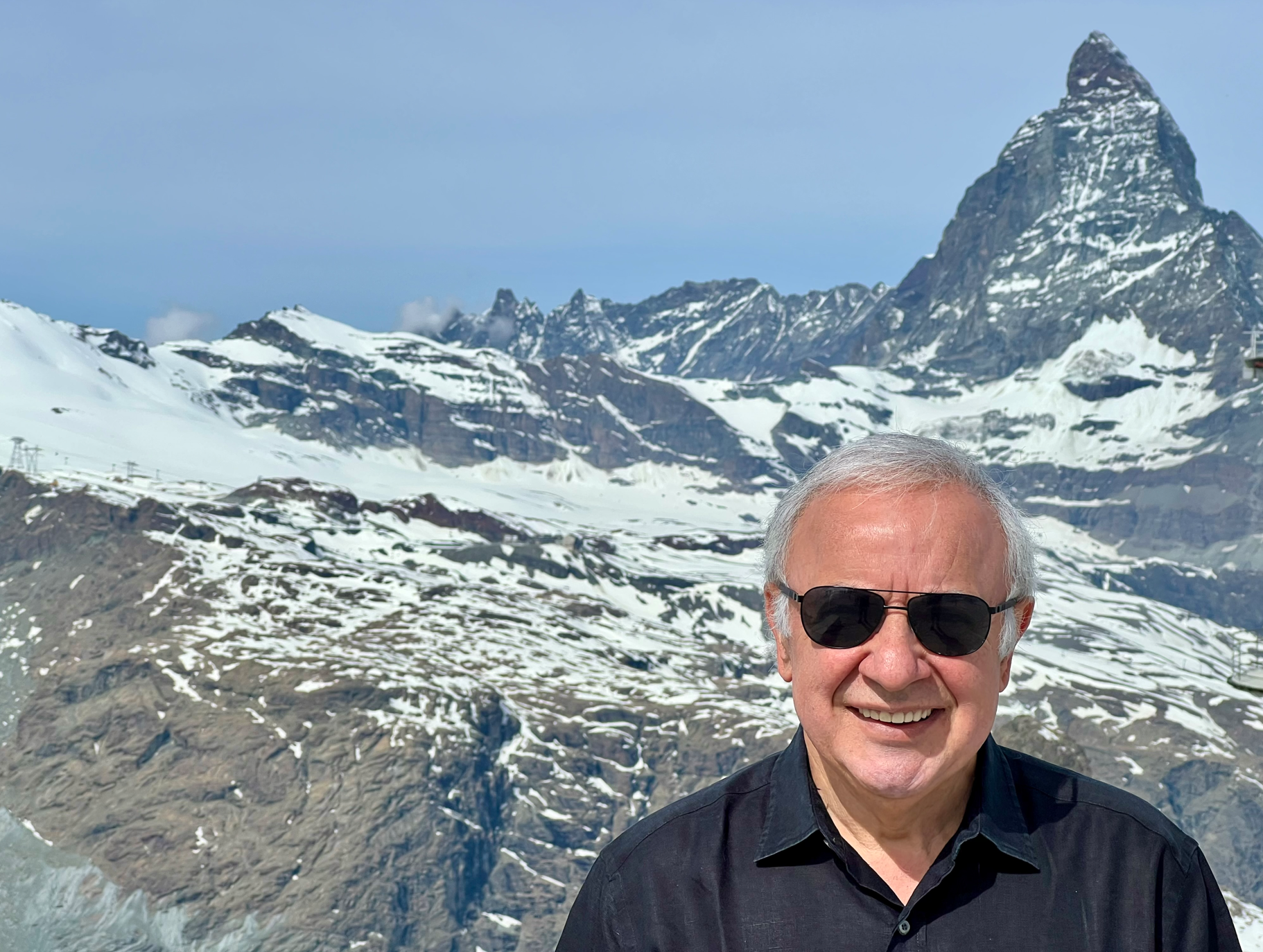
Continuing the journey to learn something new, we explore the Matterhorn in Zermatt Switzerland. Believed to be 50 to 60 million years old, this world-famous mountain was formed when the African crashed into the European tectonic plate.
The Matterhorn, in Italian known as Monte Cervino and French as Mont Cervin, is the 10th highest mountain in Switzerland at 14,692 feet (4,478 meters). The summit was first reached on July 14, 1865 by a team led by Edward Whymper. During the descent, four members of the team fell to their death. The Matterhorn is one of the most dangerous mountains to climb in the Alps with over 500 deaths to date.
The Matterhorn first appeared on the famous Toblerone chocolate in 1960. Look closely at the mountain on the packaging and you will see a bear. This is a reference to the city of Bern, where Theodor Tobler first invented the chocolate bar.
The town of Zermatt at the base of the Matterhorn bans cars to preserve the Alpine environment. The Theodul glacier which you can access from Zermatt is located at 3883 meters (12,740 feet) and offers the highest elevation ski area in Europe.
Being in nature is my go-to motivational escape to clear my mind and prioritize life priorities. Mountains are an amazing inspirational mental canvas because their massive scale makes everything around you, including your worries, feel small. The raw beauty and quiet wilderness provide perspective.
Find your special natural wonder. Enjoy its beauty. Remember that you are here for a short time, and what is around you will live on. Take chances. Setbacks are miniscule, compared to the possibilities of reaching your peak life nirvana. In the lyrics from the Sound of Music, "climb every mountain, ford every stream, follow every rainbow, 'till you find your dream"
Confidence in physical retail remains solid this year. More than 55% of survey respondents said they feel confident or very confident about brick-and-mortar performance in 2026, while only around 20% expressed concern. - From Place AI Read more
The Number 1 country continued lead reinforces a broader trend: countries with strong institutions, high trust, and robust social safety nets consistently rank highest in life satisfaction. - From Visual Capitalist

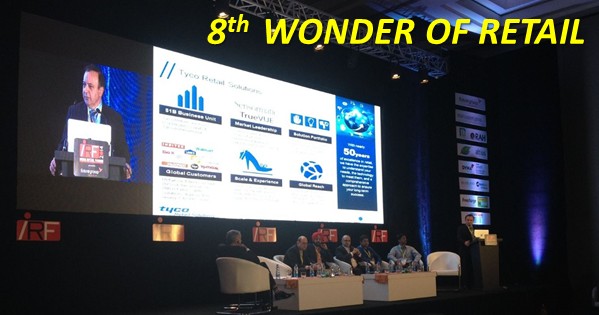 contributions included an opening presentation to a session titled "8th WONDER IN RETAIL - FUTURE PARADIGMS AND TECHNOLOGIES THAT HAVE THE POWER TO CARRY OUT DISRUPTIVE INNOVATIONS". Summarizing key insights from the opening presentation:
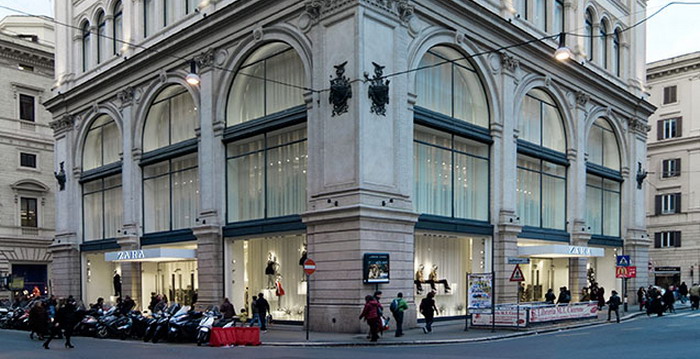 Couple weeks ago Inditex, one of the world's largest apparel retailers, went public with their Zara deployment of item level RFID. Pablo Isla, the chairman and CEO, announced that
  lost $112 billion to
  going "Back to the Future".
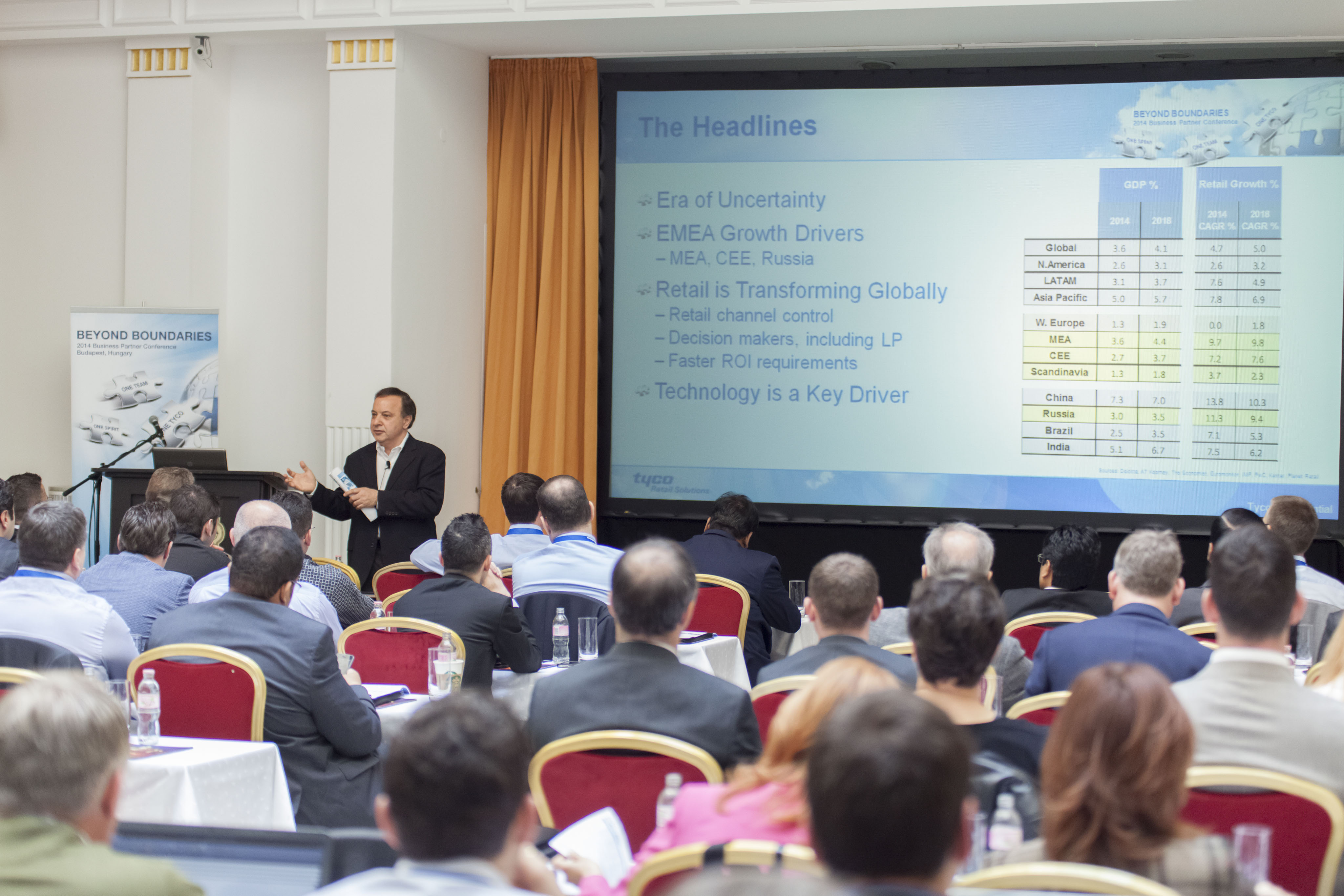 Earlier this month had the pleasure to speak to 100+ business leaders from Central, Eastern Europe, Scandinavia, Russia, and the Middle East at a conference in Budapest Hungary. This week's post summarizes some of the key insights from my presentation titled "The Future of Retail".
 following are key ideas from the 136 page report.
  trying to mine:
 supermarket. The massive amount of data on shipping trends, i.e. what's selling, placed the manufacturers at the center of controlling the information to drive retail sales.
  Every year, the National Retail Federation (NRF) trade event in New York seems to get bigger and more global. 2014 did not disappoint with over 30,000 retail professionals listening to 300+ industry experts and visiting a record 200,000 square feet of exhibit space showcasing the latest technologies. Brazil had once again the largest contingent of attendees outside the United States.
 growth. Differentiation can take many forms and include price, product quality, store decor, targeted consumer audience, and the business model itself. Two recent examples of successful retail differentiation: