October in retail means one thing above all: the holiday planning season is already well underway, even though actual shopping is still six weeks out. Every year around this time, I get some version of the same question. What is actually different this time?
The honest answer is that the calendar traditions have barely moved. Black Friday is still Black Friday. Cyber Monday still anchors the first week of December shopping. Thanksgiving is still when the industry pauses to take stock before the sprint begins. What has changed, and changed meaningfully, is what shoppers are doing inside that calendar. That gap, between the fixed tradition and the shifting behavior inside it, is the real story heading into the 2026 season.
Disturbingly Younger People Finding Retail Theft Acceptable
Retailers across the United States, the United Kingdom, and Australia are confronting a shifting landscape of crime that is reshaping store operations, staffing, and the customer experience. Once dominated by opportunistic shoplifting, modern retail crime now spans sophisticated, organized networks, increasing instances of violence, and a growing mix of in-store and online fraud. These trends are driving higher losses, rising security costs, and mounting pressure on policymakers and industry leaders to find practical, rights-respecting responses that restore safety without alienating legitimate customers.
In the United States, the picture is marked by a surge in organized retail theft and an alarming rise in violent incidents. High-profile episodes and viral video-sharing have amplified public concern, while supply-chain vulnerabilities and resale markets—both offline and online—have created more profitable avenues for stolen goods. Retailers respond with fortified loss-prevention teams, technology investments such as AI-powered cameras and inventory analytics, and closer collaboration with law enforcement, yet many report inconsistent legal outcomes and limited deterrence from existing penalties.
The United Kingdom’s retail sector faces its own distinct pressures. Persistent shoplifting, increases in “grab-and-run” thefts, and an uptick in violence against staff have prompted widespread calls for tougher sentences and more consistent policing. At the same time, austerity-era reductions in policing capacity and court backlogs have frustrated retailers seeking swift redress. Technology adoption—ranging from heat-mapping for store layouts to digital evidence-sharing platforms—has helped some chains reduce losses, but smaller independent shops remain especially vulnerable.
Australia reflects a blend of the UK and US dynamics: noticeable growth in organized retail crime and repeat offending, alongside rising concerns about aggressive behavior toward frontline staff. Geographic dispersion and differing state-level legal frameworks produce uneven enforcement outcomes, prompting national industry bodies to push for coordinated reforms and better data-sharing. Retailers across Australia are increasingly investing in training, protective store design, and partnerships with community groups to mitigate risk while preserving accessibility and service.
Together, these regional snapshots reveal common drivers—organized resale markets, the interplay between online and physical theft, and constrained public resources—that complicate straightforward solutions. Yet differences in legal frameworks, policing models, and retail structures shape how each country experiences and addresses the problem. Understanding both the shared patterns and unique local factors is essential for crafting responses that reduce harm, support workers, and sustain a healthy retail environment.
Persistent Growing Retail Crime in the United States
It seems to be an eternity, but is has only been a couple of weeks since the end of the National Retail Federation Big Show in New York. As I do every year, it is time to summarize my key takeaways.
The 2026 theme was “The Next Now” and it included representation of 5000+ brands from 100+ countries joining 40,000+ people in New York City for the annual retail pilgrimage.
For me personally, this event is very exhausting. During my action packed five days of retail events, I tracked 81,297 steps (38.5 miles / 62 km) shuttling between many meetings, celebrations, meeting friends, and for a couple of days three dinner per night. Though was voice failed me by the end, I loved every single minute of it.
This article summarizes my top 5 game changing innovation NRF moments -- from finding the real Retail ROI on day one, the frenzied few days in the Jacob Javits Convention Center, and concluding with the annual kickoff of the Loss Prevention Research Council. It is a data centric review of the continuous evolutionary improvement of the retail industry as confirmed by NRF 2026.
Explore how AI, evolving consumer habits, and new revenue models are reshaping retail
For the retail industry 2025 was another year of transformation, resilience, and recalibration. Tariffs, inflation, and continuing geopolitical tensions posed challenges, but demand remained strong in many regions, particularly in categories tied to lifestyle, wellness, and convenience.
Technology continued to reshape the retail landscape with AI tools driving greater personalization, automation, and smarter inventory management. Omnichannel strategies became standard, as shoppers increasingly moved fluidly between online and in-store experiences. Social commerce, mobile-first engagement, and retail media networks redefined how brands interact with consumers.
Overall, 2025 was another pivotal year where innovation and adaptability determined success. Retailers that embraced agility, data-driven decision making, and customer-centric models weathered the headwinds and laid the groundwork for continued growth into the new year.
The industry is not facing an apocalypse. Stores are not dead. Quite the opposite, the physical store has become an even more important component to the industry success formula. With all the hype of online taking over, it is worth remembering that 87% of all retail revenues in 2025 still had a store component.
If not an apocalypse, then what revolutionary trends are ahead for 2026? Artificial Intelligence (AI) will continue its march in disrupting the industry. A generational divide is accelerating how consumers engage across retail channels. Retailers are also finding and quickly adopting more unconventional revenue sources.
The Reality Versus the Hype of Retail Artificial Intelligence
As we approach the USA Holiday of Thanksgiving where there will lots of leftovers, it is time to revisit and summarize some key data driven retail trends from this year that were left behind. Although we are looking backwards into the year, these trends are actually critical for the setup into a successful new year.
2025 to date continues to be a transformational year for the retail industry. Artificial intelligence continues its march to disrupt all industries including retail. Tariffs brought new headwinds impacting consumer confidence. The physical store continues to grow in importance in an omnichannel shopping world. Retail media and social commerce are increasing their retail industry presence. Change remains the new normal.
In this article, we summarize the latest list of the world's largest retailers, including who is winning or losing in the global expansion wars. We next assess the technologies being prioritized to improve the profitability of the physical store and the latest retail crime trends. Finally, we close with Gartner's latest hype cycle of retail technologies.
It is only September and in many retail stores, the holiday shopping season has already arrived. The 2025 edition is anticipated to be a complex period, characterized by shifting consumer behaviors, economic uncertainty, and continued technology harmonization across physical and digital channels.
For the United States, all the major forecasts point to another positive, yet softer, retail holiday shopping season. Consumers are expected to be more value-driven, seeking deals and discounts while also prioritizing trust and a sense of normalcy from brands.
Factors such as inflation, tariffs, and generational divides in spending habits are expected to play a significant role in how consumers approach their holiday shopping. Retailers are advised to focus on delivering value, personalization, and seamless customer experiences to succeed in this evolving landscape.
This article begins with an assessment on the US sales trends entering the holiday season and the major technologies that will drive retail transformation in the next two years. It will then present the major industry predictions for the 2025 retail holiday season, the sectors expected to be hot, generational challenges, physical versus digital store growth, spending patterns by global region, when shoppers begin their holiday shopping, and the 2025 busiest shopping days.
In all my global presentations, I share insights on the three post World War II megatrends that created major power shifts in retail business models. These shifts go beyond mere technological advancements or consumer preferences; they encompass a holistic transformation in how brands engage with customers, redefine their value propositions, and adapt to an increasingly interconnected world.
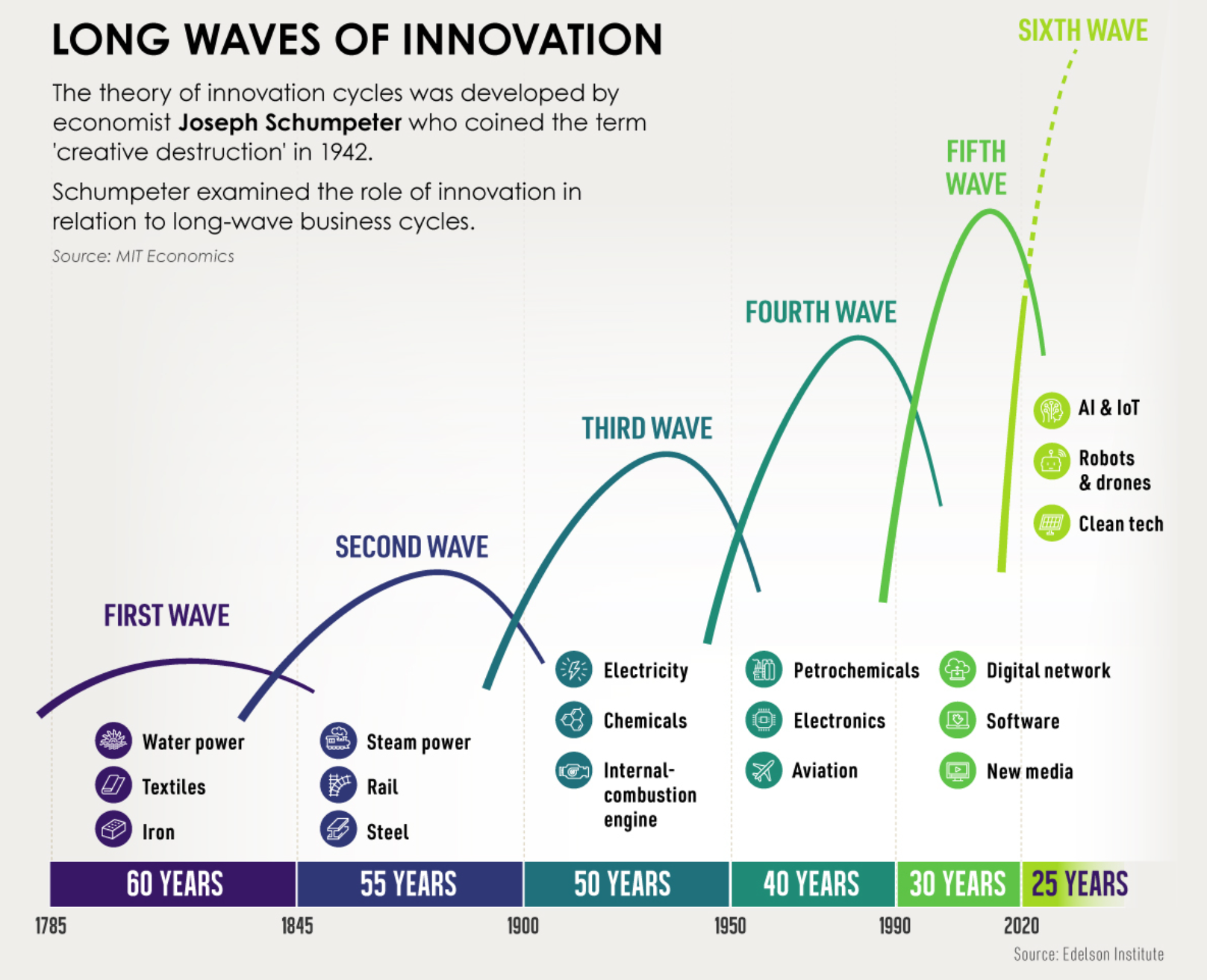
Retail is not immune from the major technology advancements that impacted all industry sectors since the start of the industrial revolution. These long waves of innovation have provided the base fuel to many societal transformational changes.
We are currently in the sixth long wave of innovation with Artificial Intelligence, Internet-of-Things, robots & drones, and cleaning technologies leading the way. Crucially, note that each technology wave is getting shorter.
This article summarizes my three transformational trends that have transformed retail since World War II. It will explain the triggers, the momentum, the impact, and the power shifts driven by these major trends. As with the long waves of innovation, the 4th megatrend has already arrived and I am guessing you know what it is. You will, however, be surprised by the societal group that will gain the most power from this latest disruptive trend.
As many of you that have followed me over the years know, a side passion is continuously updating and delivering my keynote presentation, "The Disruptive Future of Retail." In the last 12 months, I had the pleasure to present the latest views to many retailers and industry groups in North and South America, Asia, and Europe.
By 2030, Statista projects a global retail industry valued at nearly $36 trillion. Ecommerce will continue to grow in the run up to the new decade reaching globally nearly $8 trillion by 2028, accounting for only 22.5% of total retail sales.
Stores will not die, but they will also not remain static. The digital acceleration will continue and the changes ahead promise greater consumer loyalty and engagement. Technology will continue to play a strategic role with fast adopters having a competitive advantage.
The industry will face some challenges, but growing middle classes in large countries such as China and India will keep retail growing into the next decade. Three disruptive trends will move the industry positively forward.
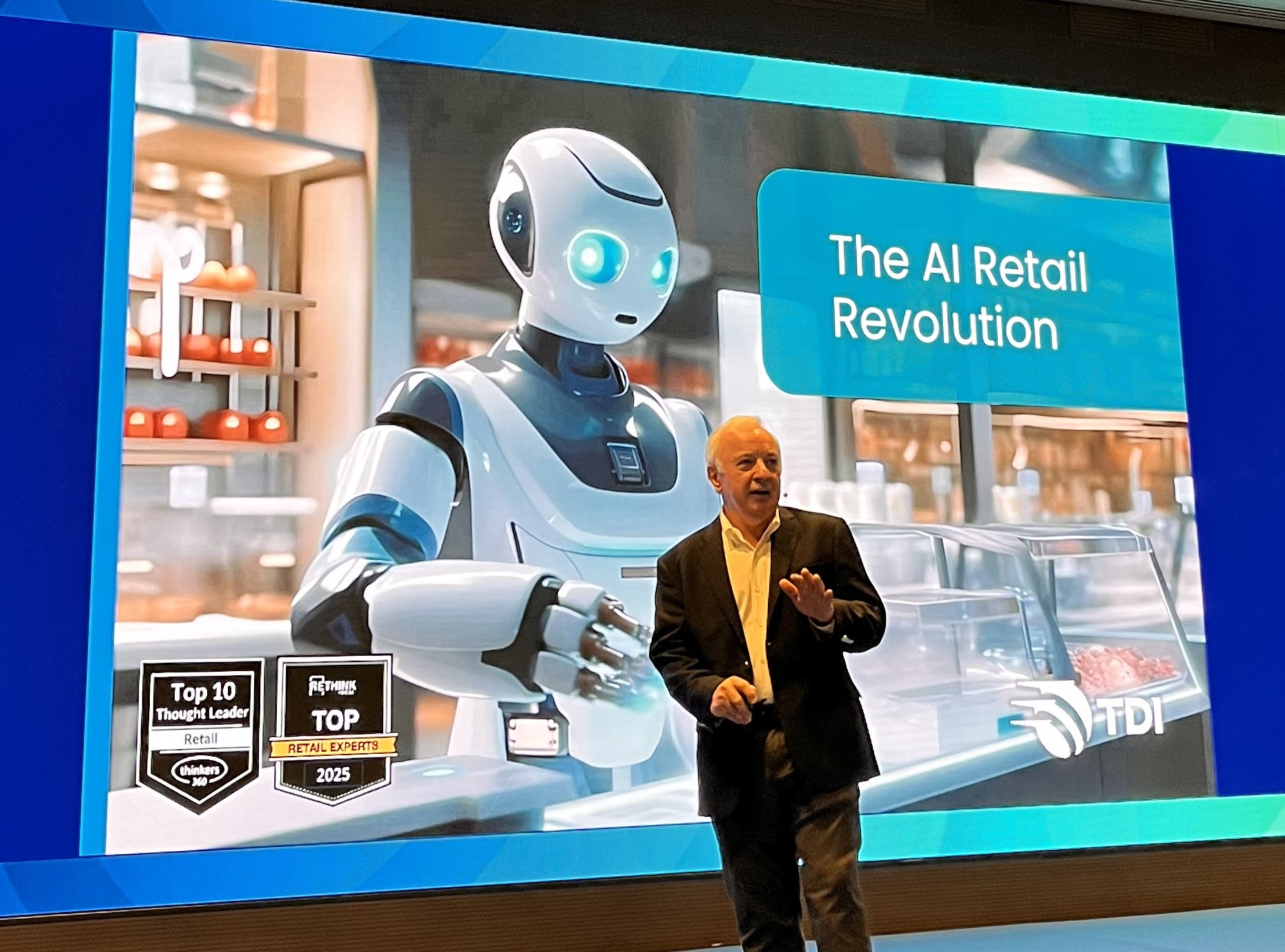
The retail industry is experiencing a transformative evolution, driven by the rapid advancement of artificial intelligence (AI). As consumers increasingly demand personalized experiences and seamless transactions, retailers are turning to AI technologies to meet these expectations.
From optimizing inventory management to enhancing customer engagement through tailored recommendations, AI is reshaping how businesses operate and interact with shoppers. This growth is not only streamlining processes but also creating innovative shopping experiences that were once unimaginable. As major players in the retail sector embrace AI, the landscape is set for a revolution that will redefine the future of commerce.
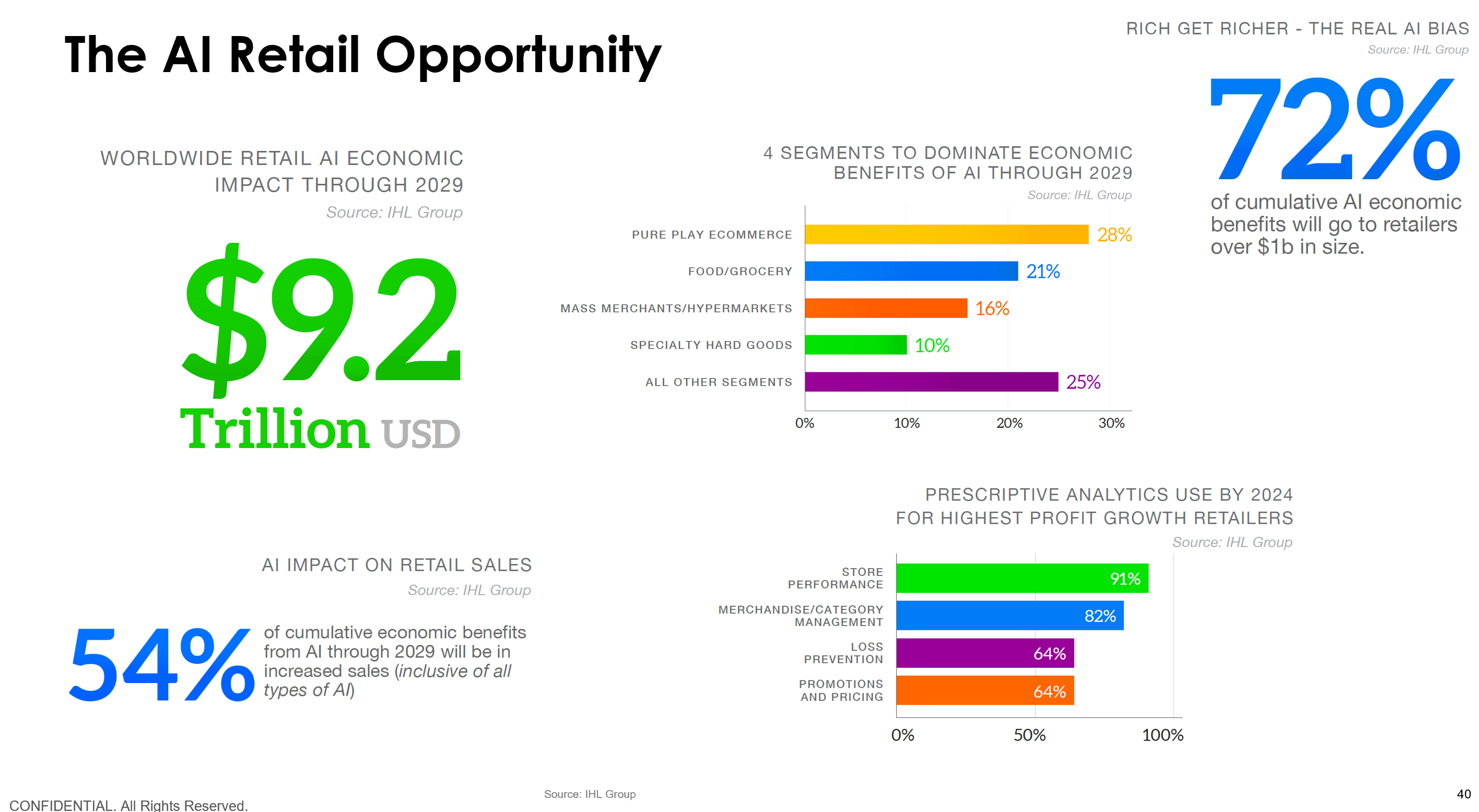
By 2029, according to IHL Group, the worldwide impact of AI on the retail industry will be an astounding $9.2 trillion. Seventy-two percent of the benefit will be to retailers over $1 billion in size.
The segments that will dominate economic benefits through 2029 are pure play e-commerce, food / grocery, mass merchandisers / hypermarkets, and specialty hard goods. The majority of the economic benefit to retail will be increased sales.
This article examines deeper the impact of AI in the retail industry, the retail companies leading the way, the primary AI applications, and closes with insights on what ChatGPT tells us AI will deliver in the next ten years.
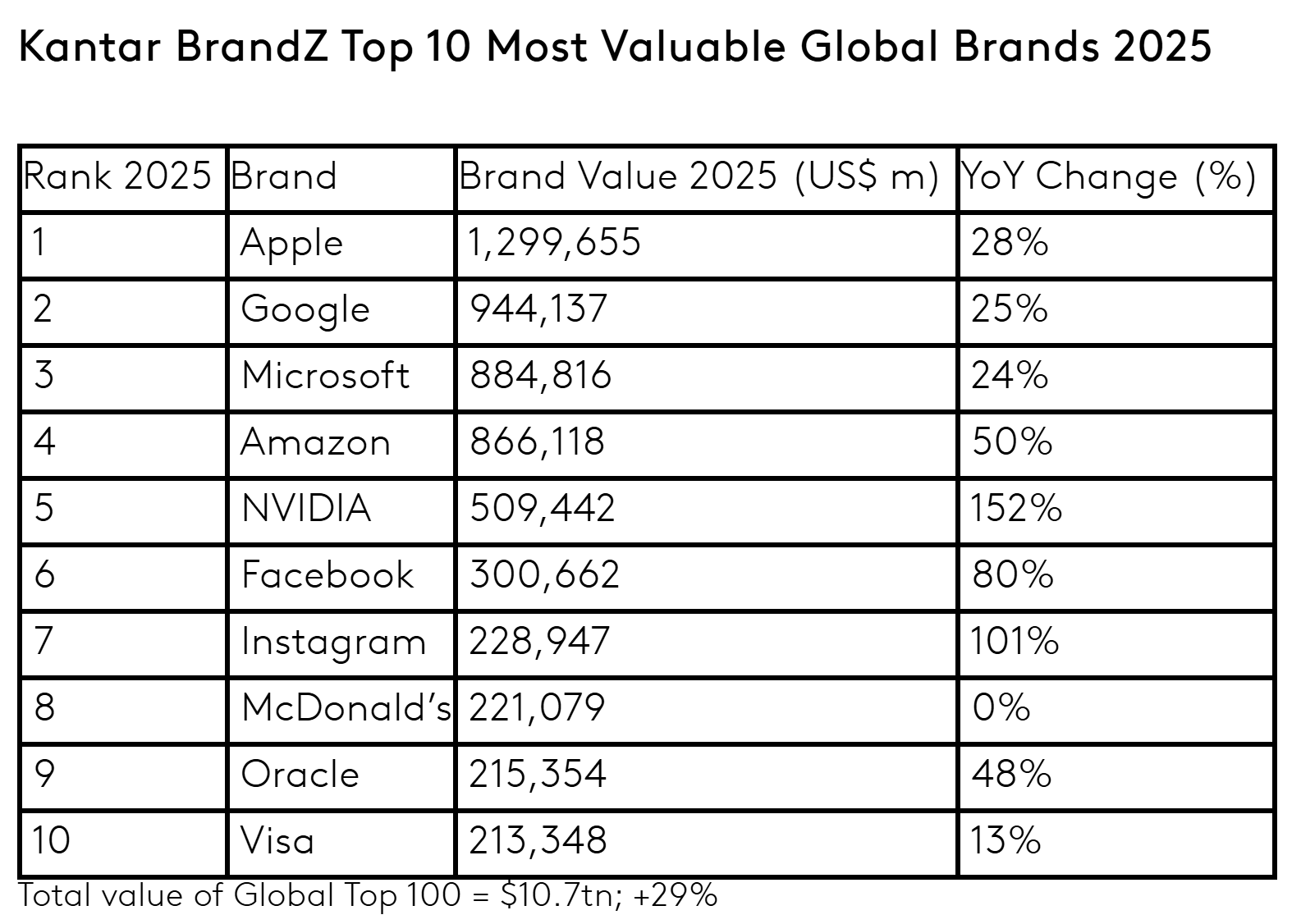
The new Kantar BrandZ leadership branding report has arrived and it is time to summarize my favorite content and categories. The 20th edition of this research finds that since 2006, over $9.3 trillion has been added to the Global Top 100, now valued at $10.7 trillion.
Brands from the United States, "now comprise 82% of the total value of the Global Top 100, up from 63% in 2006, but a rise among Chinese brands and volatility caused by escalating tariffs could threaten this order. Chinese brands have doubled their value over the past 20 years, now accounting for 6% of the overall value of the Global Top 100. These shifts have come at the expense of European brands, which for now account for only 7% of the Global Top 100 (down from 26% in 2006)."
"Even through economic crises, the world’s most valuable brands have consistently outperformed the S&P 500 and MSCI World Index over 20 years. This is irrefutable proof of marketing’s value. A brand is a company’s most valuable asset, and the last thing businesses should be doing in response to market shocks is cutting marketing investment."
"Brands that disrupted their category or reinvented themselves have accounted for almost three-quarters (71%) of the incremental $9.3 trillion of value created in the Global Top 100 since 2006. In 2025 this includes Stripe and Chipotle, which have entered the ranking for the first time (in 85th and 86th place) and Aldi, which has been in the Global Top 100 for 15 of the past 20 years, and is currently ranked 94th."
This article focuses on the global branding leaders in apparel, luxury and retail. All content is from the 2025 Kantar BrandZ Report including ideas on on avoiding brand failures, insights to branding leadership, and a peek at AI future impact.
Continuing the journey to learn something new, we explore the Matterhorn in Zermatt Switzerland. Believed to be 50 to 60 million years old, this world-famous mountain was formed when the African crashed into the European tectonic plate.
The Matterhorn, in Italian known as Monte Cervino and French as Mont Cervin, is the 10th highest mountain in Switzerland at 14,692 feet (4,478 meters). The summit was first reached on July 14, 1865 by a team led by Edward Whymper. During the descent, four members of the team fell to their death. The Matterhorn is one of the most dangerous mountains to climb in the Alps with over 500 deaths to date.
The Matterhorn first appeared on the famous Toblerone chocolate in 1960. Look closely at the mountain on the packaging and you will see a bear. This is a reference to the city of Bern, where Theodor Tobler first invented the chocolate bar.
The town of Zermatt at the base of the Matterhorn bans cars to preserve the Alpine environment. The Theodul glacier which you can access from Zermatt is located at 3883 meters (12,740 feet) and offers the highest elevation ski area in Europe.
Being in nature is my go-to motivational escape to clear my mind and prioritize life priorities. Mountains are an amazing inspirational mental canvas because their massive scale makes everything around you, including your worries, feel small. The raw beauty and quiet wilderness provide perspective.
Find your special natural wonder. Enjoy its beauty. Remember that you are here for a short time, and what is around you will live on. Take chances. Setbacks are miniscule, compared to the possibilities of reaching your peak life nirvana. In the lyrics from the Sound of Music, "climb every mountain, ford every stream, follow every rainbow, 'till you find your dream"
Confidence in physical retail remains solid this year. More than 55% of survey respondents said they feel confident or very confident about brick-and-mortar performance in 2026, while only around 20% expressed concern. - From Place AI Read more
The Number 1 country continued lead reinforces a broader trend: countries with strong institutions, high trust, and robust social safety nets consistently rank highest in life satisfaction. - From Visual Capitalist