The Future of Retail Store Operations and Asset Protection
"Information is power, and the gain you get from empowering your associates more than offsets the risk of informing your competitor." - Sam Walton
Most impressive from a recent evening visit to the Walmart Museum in Arkansas were the company’s yearly chronological milestones throughout the exhibit areas. Being a technology geek, my focus quickly transitioned to understanding the historical innovation adoption cycle. Additionally, as a student of leadership, of interest was the culture messaging of founder Sam Walton in growing the company.
The following day, I had the pleasure of spending quality time with the Walmart Asset Protection (AP) team. Part of the trip included touring new technologies deployed at a store in Tulsa, Oklahoma.
The Walmart Museum, the AP conversations, and the store walk were a great reminder of several key success formula ingredients in crafting the world’s largest retailer.
Roughly a year ago, I published a personal Plan B blog titled “Personal Branding and Retiring Early on Your Own Terms”. As I stated in that post, “continuous learning” opened new possibilities that were calling to be executed.
The objectives that I had set out for my new career included:
Working with a few select private equity firms in developing growth plans for their portfolio companies either through consulting or board positions.
Continue to public speak on the “Disruptive Future of Retail”.
Monetize my personal website www.tonydonofrio.com.
Continue to write about technology and leadership, including publishing a couple books.
In one word, the last 12+ months have been transformational.
Almost exactly a year ago, in my last RFID article titled "Keeping Physical Retail In-Stock", I concluded that the two most relevant components of positive customer experiences in physical stores are fast checkouts and products being in-stock. Multiple recent retailer quarterly earnings calls, several articles, and two requests from China on direct consulting with potential investors in RFID inspired this updated technology review.
In the latest Nike earnings call, CEO Mike Parker directly stated that RFID "is improving product visibility and is an important step toward integrating our diverse ecosystem of physical and digital experiences, distribution centers and contract factories." Calvin McDonald, CEO of Lululemon in his earnings call cited the company's strength and unique position in being able "to activate great product across our omni-guest experiences, leveraging our stores, community and events." Both Nike and Lululemon reported strong financial results for their respective quarters.
From what I have personally seen in working with major global retailers deploying RFID, this Internet-of-Things (IoT) technology continues to have digital transformation possibilities.
The Loss Prevention Research Council (LPRC) is made up of over 70 retailers (approx. 200,000 stores / $2 Trillion in sales) and 75 solutions partners collaborating to develop effective loss and crime control solutions through science backed extensive research. To date the group has conducted over 300 real world loss prevention research projects for retailers and partners.
Recently, I had the pleasure of attending the launch of "LPRC Innovate" program at the University of Florida. This new working group was stood up to provide cutting edge people, places, processes to support major retailers and solutions partners as they ideate, simulate, and test new digital, people, and design options.
As an industry influencer, it is my pleasure to be joining "LPRC Innovate" as we continue to scientifically re-define and digitally transform the future of retail. To highlight the great LPRC work to date, this article presents a couple never before published examples of what's in the mind of a shoplifter.
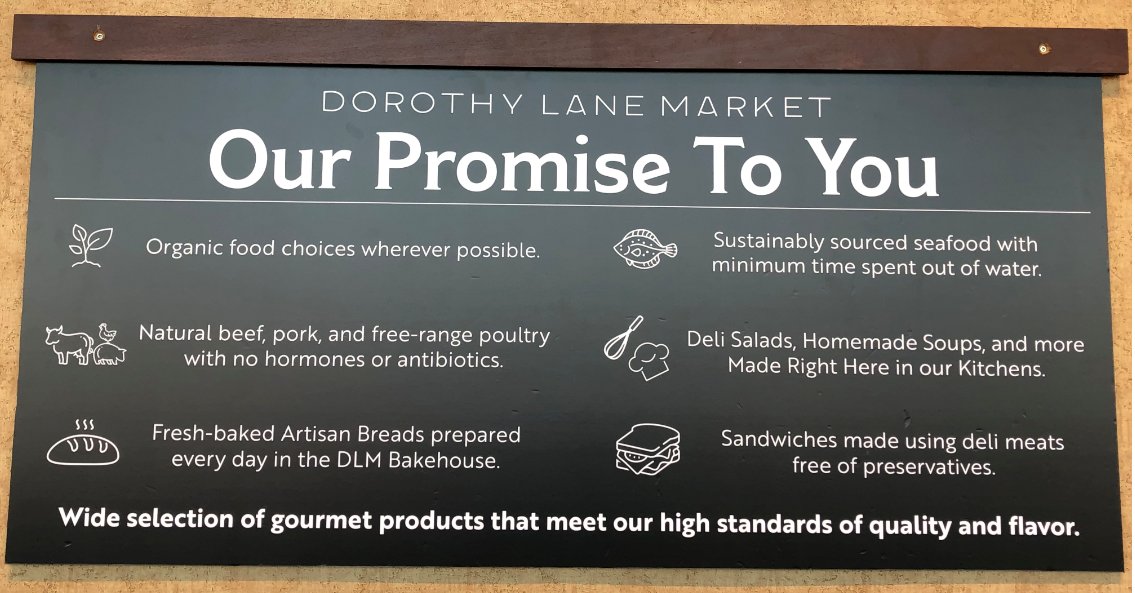
“Norman (Mayne, CEO of Dorothy Lane Market) is a truly unique merchant. He has a special ability to identify concepts and products that will enthrall customers. Furthermore, he has allowed his people to pursue these same ideals. The result: his stores are masterpieces!” - Danny Wegman, Chairman of Wegmans
In multiple of my articles, I have been consistent that consumers and store associates as brand ambassadors plus immersive customer experiences are the future of retail. Growing up in this industry, it is always exhilarating observing these success elements in a live environment.
Several weeks ago, I had the pleasure of re-visiting one of my favorite stores in the world, Dorothy Lane Market (DLM) in the USA state of Ohio. This retail masterpiece celebrated 70 years of being in business in 2018.
Our quick lunch possibilities visit into one of their locations evolved into an immersive 2+ hour visualization journey of the future supermarket. This post summarizes a few of the captured images and the memories they brought back from previously living in this part of the world.
Several weeks ago I had the pleasure of participating in a Rethink Retail podcast with Bryan Gildenberg, Chief Knowledge Officer of Retail, Sales & Shopper at WPP’s Kantar Consulting and Paul Lewis, CMO of digital transformation agency Valtech. With Julia Raymond moderating, the three of us debated the growth strategies of Amazon and Walmart in their quest for global retail leadership.
The lively discussions included our musings on Amazon's announcement of one-day shipping, the value of the Amazon's Prime program, potential acquisition strategies for growth, and the looming online grocery battles. This post summarizes additional data insights not discussed in the podcast.
Amazon Strengths
Here's my short list of Amazon strengths that I had summarized in preparing for the podcast:
In the past twelve months, I have spent substantial quality time with global retailers, expanded my social media reach, engaged a substantial number of technology companies including more Silicon Valley startups; all focused on being a driver of disruptive retail change. Reflecting on what I saw and heard in my just completed European tour this week, I can confirm that retail issues and solutions continue to have global tendencies.
This post will introduce you to what I believe are the top 3 next wave retail growth technologies. These solutions have both security and operational applications, but because I am attending the Retail Industry Leaders Association (RILA) Asset Protection conference starting this weekend, some security aspects will be emphasized.
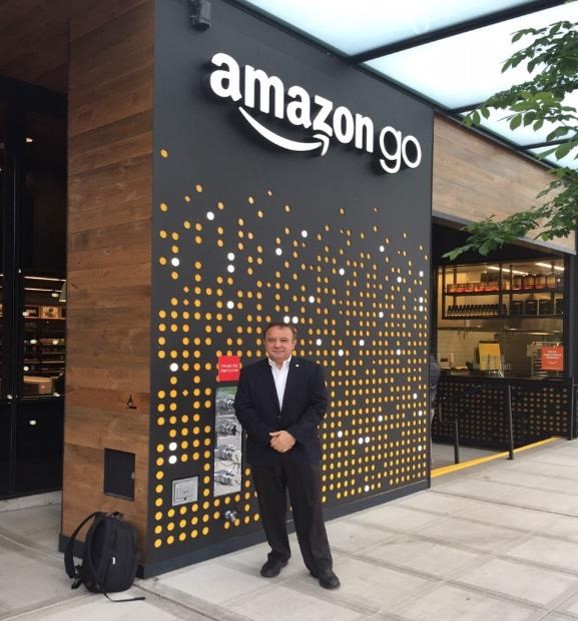
Several data points in recent weeks led to this update on the state of retail self-checkout (SCO) deployments. Among these are the increased self-service stores openings with Asia / North America taking the lead, the evolution from stationary SCOs to multiple variations of Scan & Go applications, and new research, some of which you will only see in this article, on the theft challenges with these new autonomous solutions.
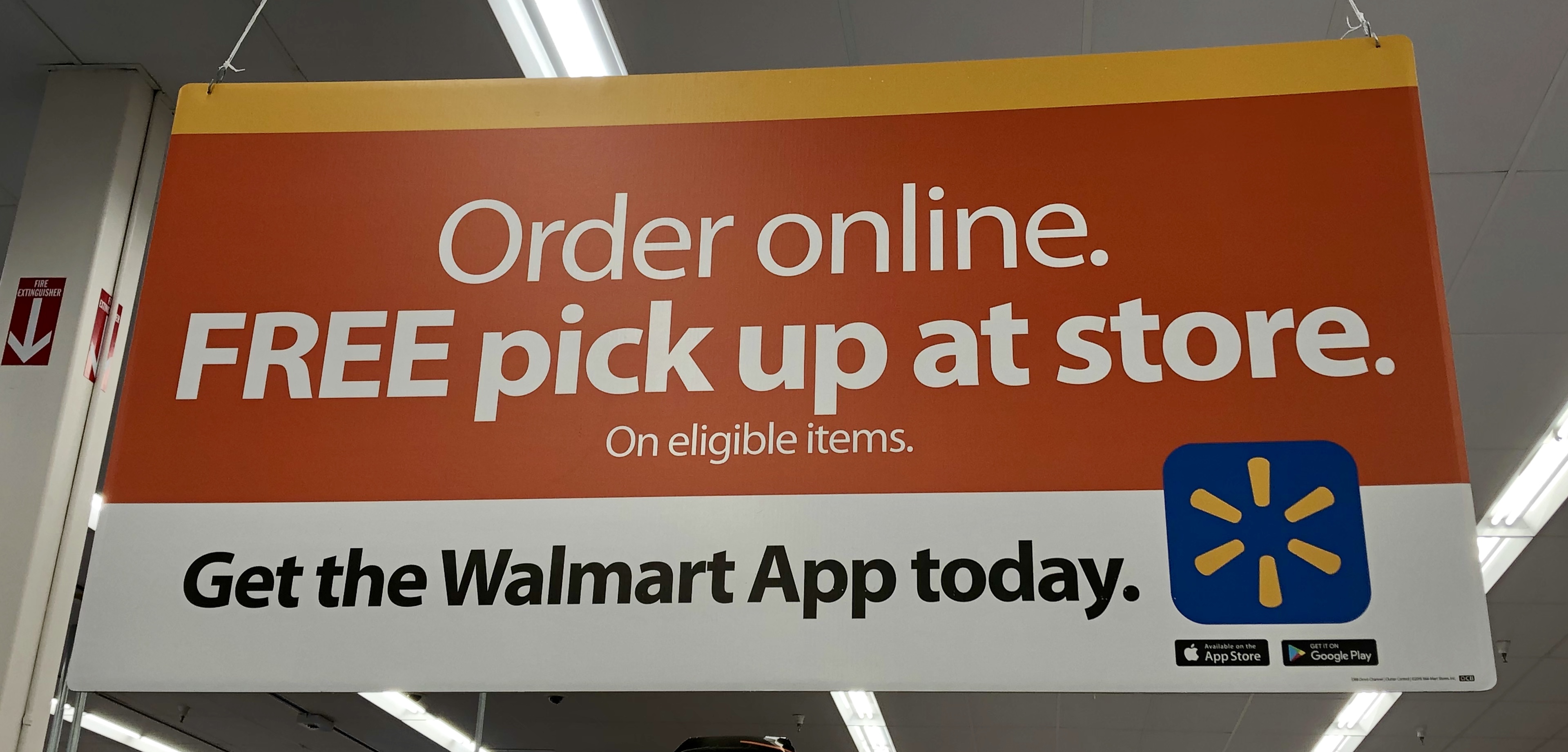
My favorite story was a February 2019 article indicating that Walmart was transitioning from a consumer to a store associate "Check Out With Me" Scan & Go model with shopper theft cited as one of the major reasons. "In one case during the (consumer) Scan & Go rollout, a customer tried to leave a Walmart store with a cart of about 100 items, only 40 of which he had scanned."
Self-Checkout is a Growth Retail Application
According to Greg Buzek at the IHL Group, retailers that have traditional SCO see about 40% of their transactions and 20% of their sales volume now taking place at self-checkout stations. About 20% of large retailers / restaurants are rolling out Scan & Go consumer options in the next 12 months and 44% will have that option through their apps by 2020.
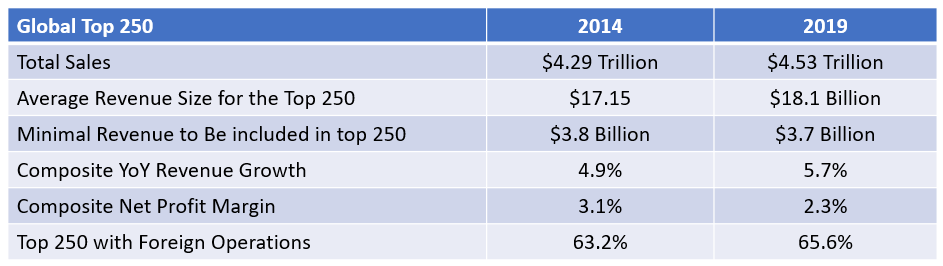
Annually I look forward to the Deloitte Global Powers of Retailing industry research which provides a detailed growth trajectory review of the global top 250 retailers. This year, in addition to summarizing my favorite insights from the 2019 edition, we will look back to the 2014 report to compare and contrast the changes in the retail industry over the last five years.
All the metrics presented in this article are from these two Deloitte industry leading reports. A thought-provoking technology disruption chart from the 2014 report is also included in this post for all of us to assess the retail industry's innovation progress.
The Global Powers of Retailing
The data in the latest report indicates that the global top 250 retailers grew roughly six percent and represented $4.53 trillion in retail revenue.
Note the slight decline in minimal revenue to be included as a top 250 retailer. The industry overall had stronger revenue growth in 2019 versus 2014, but sacrificed margin in the process. Contrary to recent popular presumptions, the percentage of retailers with global operations increased in the latest report.
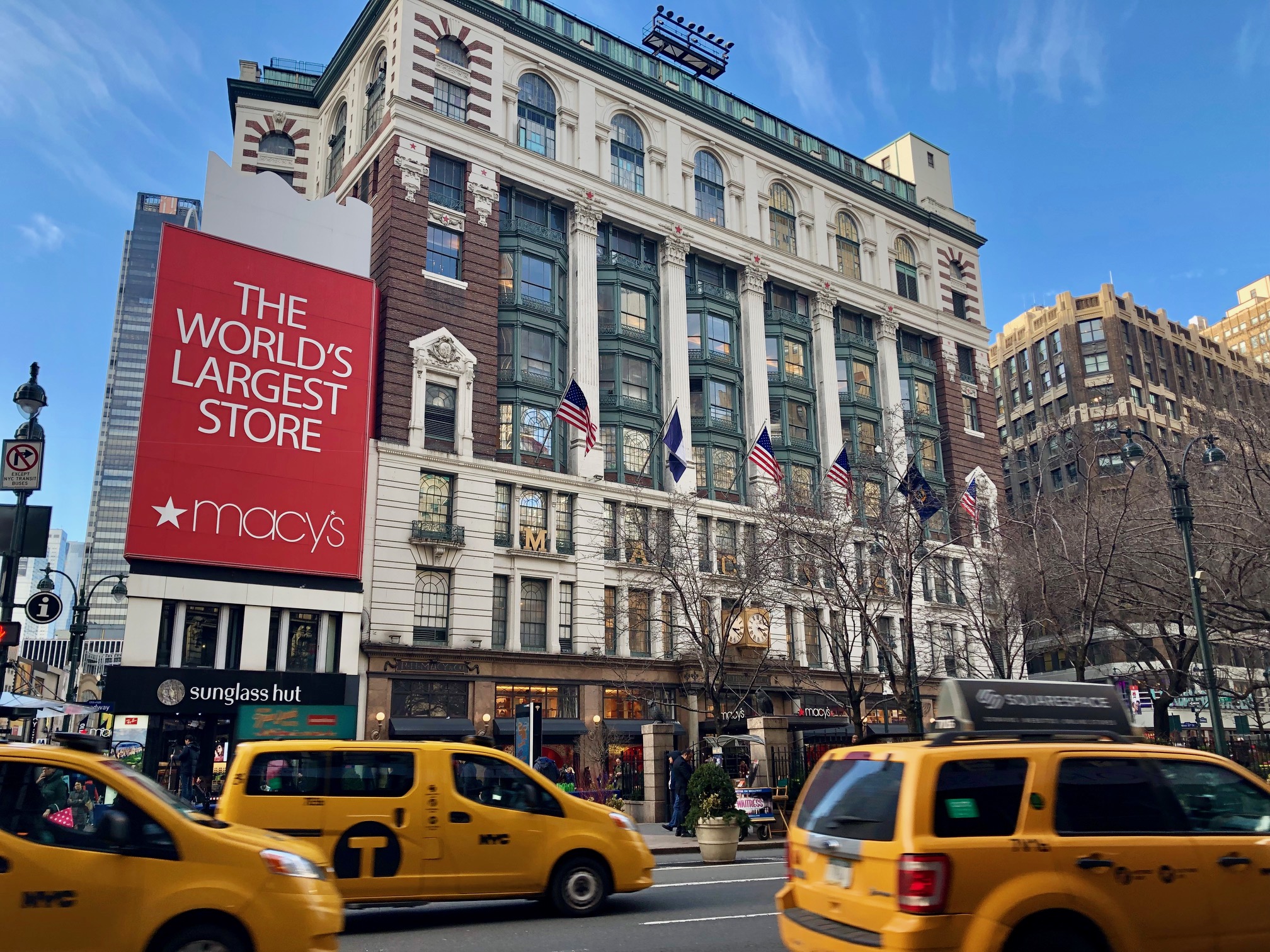
Over the last several months I have had the pleasure of spending time with Asset Protection (AP) leaders at Macy's in New York. The visits were sparked by news articles and industry discussions on their advanced deployments of RFID and the smart integration of this Internet-of-Things (IoT) technology into the loss prevention function.
The Retail Benefits of RFID
The primary driver for the deployment of RFID is to improve inventory accuracy. Generically, across the retail industry, "RFID enables cycle counts to be completed about 25 times faster than traditional manual bar code scanning. Frequent, accurate cycle counts improve inventory accuracy, typically by 20 to 30 percent, allowing a number of retailers to achieve 99 percent inventory accuracy. This enables replenishment alerts to be reliably generated, increasing on-floor availability, and decreasing out-of-stocks (OOS), typically by 15 to 30 percent. This in turn results in sales uplift in the range of 1 to 10 percent or more for those categories."
While inventory visibility is the number one benefit of RFID, in multiple industry studies, loss prevention is always near the top as a primary application. Here is an example from the 2018 Technology Outlook in the Apparel Market research.
Continuing the journey to learn something new, we explore the Matterhorn in Zermatt Switzerland. Believed to be 50 to 60 million years old, this world-famous mountain was formed when the African crashed into the European tectonic plate.
The Matterhorn, in Italian known as Monte Cervino and French as Mont Cervin, is the 10th highest mountain in Switzerland at 14,692 feet (4,478 meters). The summit was first reached on July 14, 1865 by a team led by Edward Whymper. During the descent, four members of the team fell to their death. The Matterhorn is one of the most dangerous mountains to climb in the Alps with over 500 deaths to date.
The Matterhorn first appeared on the famous Toblerone chocolate in 1960. Look closely at the mountain on the packaging and you will see a bear. This is a reference to the city of Bern, where Theodor Tobler first invented the chocolate bar.
The town of Zermatt at the base of the Matterhorn bans cars to preserve the Alpine environment. The Theodul glacier which you can access from Zermatt is located at 3883 meters (12,740 feet) and offers the highest elevation ski area in Europe.
Being in nature is my go-to motivational escape to clear my mind and prioritize life priorities. Mountains are an amazing inspirational mental canvas because their massive scale makes everything around you, including your worries, feel small. The raw beauty and quiet wilderness provide perspective.
Find your special natural wonder. Enjoy its beauty. Remember that you are here for a short time, and what is around you will live on. Take chances. Setbacks are miniscule, compared to the possibilities of reaching your peak life nirvana. In the lyrics from the Sound of Music, "climb every mountain, ford every stream, follow every rainbow, 'till you find your dream"
Confidence in physical retail remains solid this year. More than 55% of survey respondents said they feel confident or very confident about brick-and-mortar performance in 2026, while only around 20% expressed concern. - From Place AI Read more
The Number 1 country continued lead reinforces a broader trend: countries with strong institutions, high trust, and robust social safety nets consistently rank highest in life satisfaction. - From Visual Capitalist




 Several data points in recent weeks led to this update on the state of retail self-checkout (SCO) deployments. Among these are the increased self-service stores openings with Asia / North America taking the lead, the evolution from stationary SCOs to multiple variations of Scan & Go applications, and new research, some of which you will only see in this article, on the theft challenges with these new autonomous solutions.