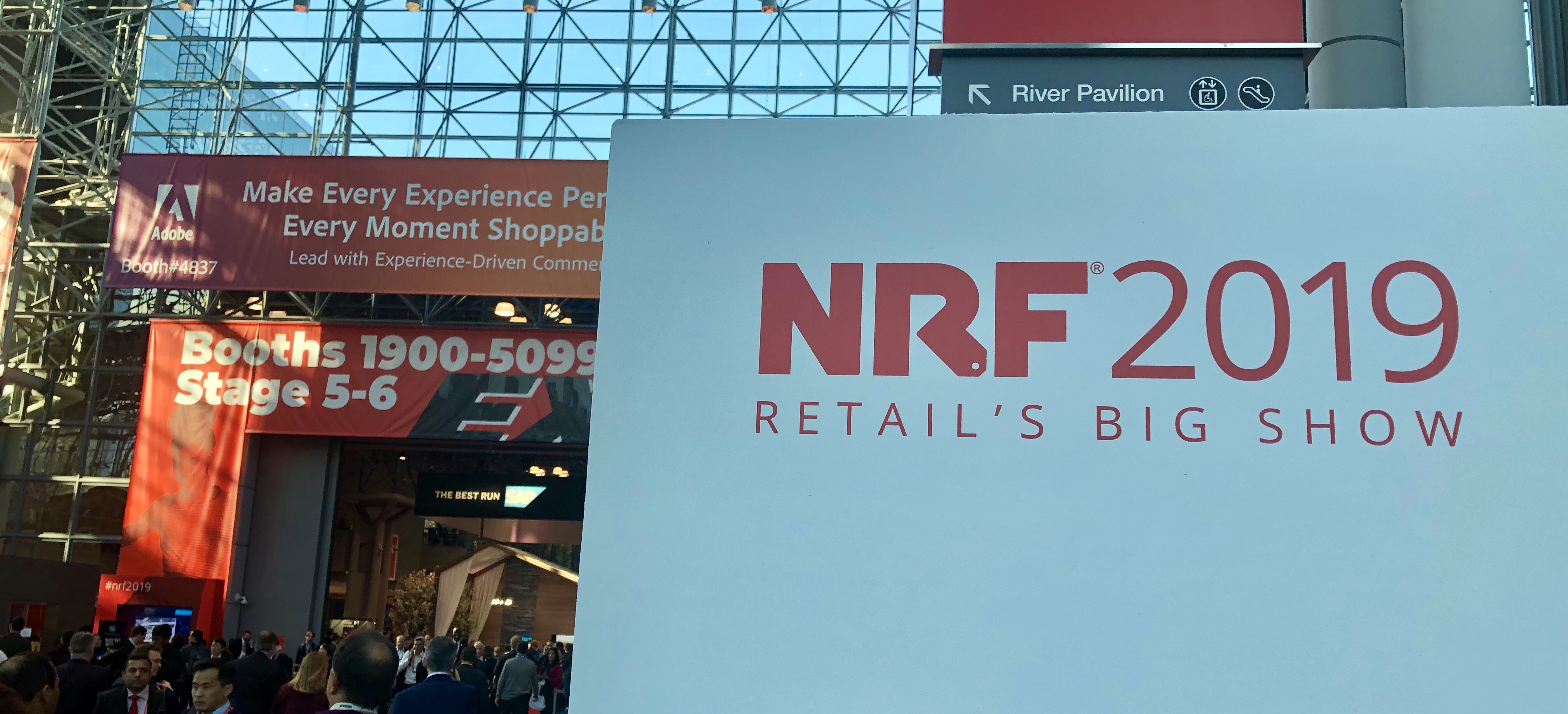
Each Saturday just prior to the January NRF Big Show, retailers, industry analysts and solutions providers gather in New York City for a unique IT conference. This fast-paced full day is a special blend of emotionally filled stories of the RetailROI (Retail Orphan Initiative) global charity work and the latest insights on the state of the retail industry.
From this year's SuperSaturday edition, here is a summary of the altruistic work of RetailROI, the latest research on the 2019 essential retail technologies, and an inspirational close on the power of branding transformation.
38,000+ Attendees, 16,000+ Retailers, 800+ Exhibitors, 100+ Sessions, 99 Countries
Let me open by sharing the video summary provided by the USA National Retail Federation (NRF) of this year's edition.
This entire week, over all my social media platforms, I am publishing multiple other NRF 2019 summary reviews. Primarily from an Expo floor perspective where billions of innovation dollars are being invested, here are my impactful retail transformational takeaways.
IoT is not Just a Buzzword
NRF 2019 confirmed that the Internet-of-Things (IoT) is moving from a buzzword to solving industry problems. Solutions were visible all over the Expo floor.
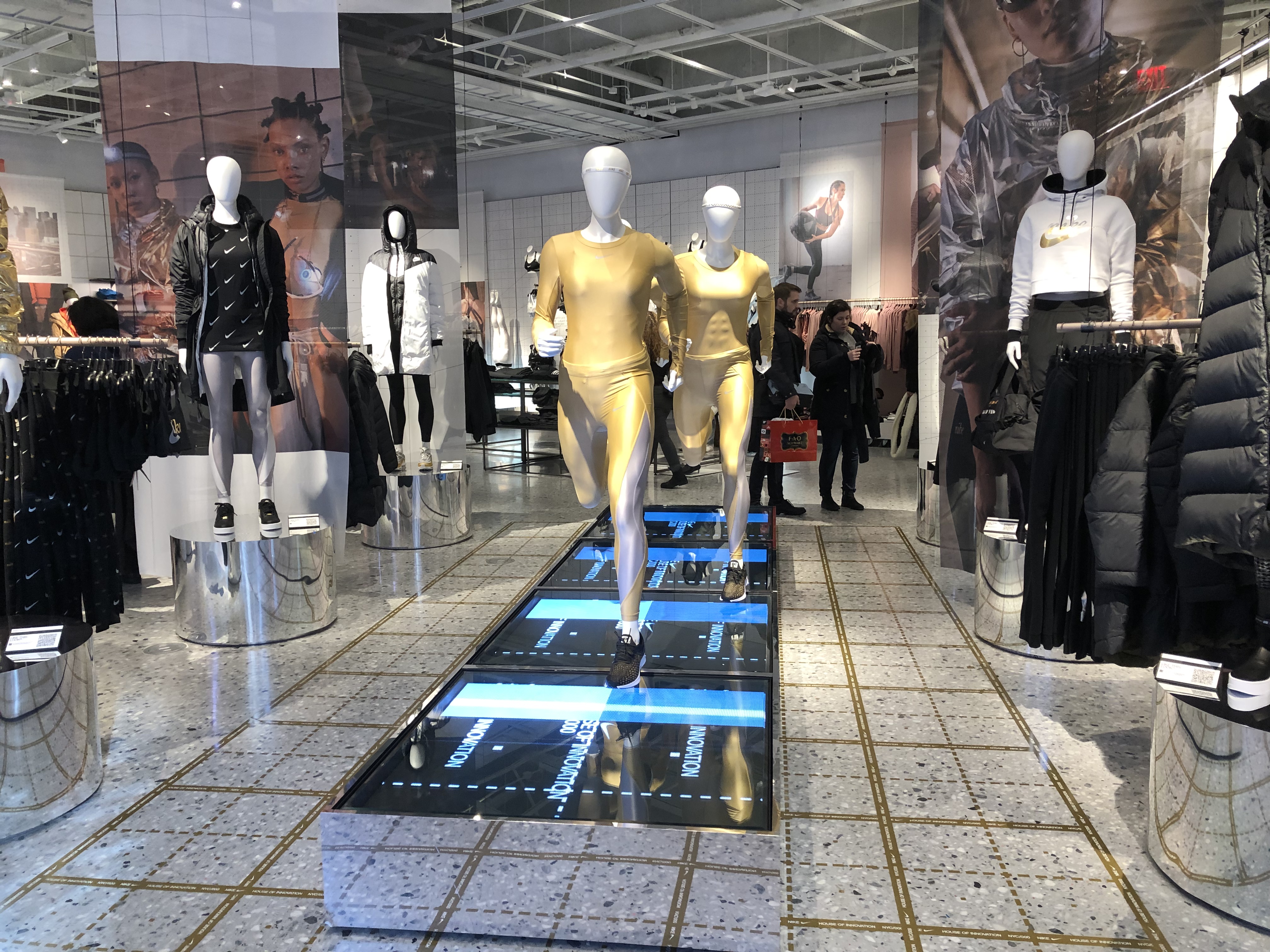
The future of retail includes digitally supported leadership branding coupled with hyper-personalized immersive consumer experiences. Of all the stores that I have visited to date around the world, the Nike House of Innovation in New York City, is the closest example that meets this critical futurist success formula.
Covering over 68,000 square feet (6,373 square meters), this new Nike flagship offers six floors of differentiated physical to digital experiences. Each floor could be a store of its own. Combined, this location is designed to meet the ever changing needs of a digitally empowered consumer.
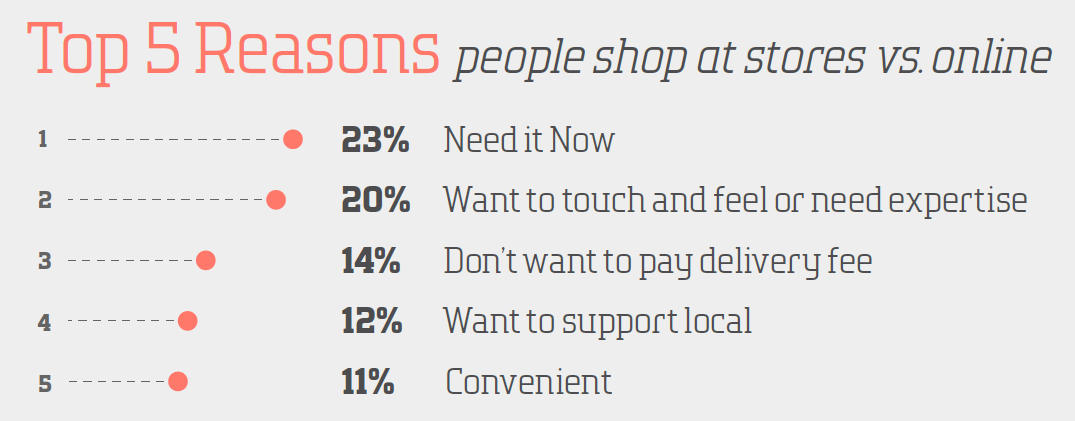
Before taking a virtual tour of the store, let's remind ourselves of why shoppers buy in physical stores (IHL study):
The Smartphone as the Portal to the Physical Store
Welcome to an uncertain and conceivably risky 2019. Despite multiple global hints of slower growth, I remain optimistic by the potential of the New Year.
On the horizon are multiple statistical landmarks that will "concentrate our minds". In 2019, half of the world will be online, India's GDP will overtake that of the UK, Nigeria's population will reach 200 million, and in USA millennials will outnumber baby-boomers to become the country's largest generation for the first time.
Inspired by one my favorite annual Economist editions, "The World in 2019", this post summarizes important global economic forecasts and looks at a few emerging risks. Timely to the upcoming NRF 2019 in New York, we will also discuss expected technology disruption and the positive prospects for the global retail industry in the New Year.
Economic Indicators Point to Continued Global Growth
This past week had the opportunity to visit the new Amazon Four-Star physical retail store in New York City. Located in the chic Soho neighborhood, collectively the items in this store have an average rating of 4.4 stars.
Visually let's walk through the store, read some early reviews, and understand why this is a worthy customer experience experiment on the road to the future of retail.
The Four-Star Reviews Are In
"It had $20 kitchen mittens resembling dog paws, $16 USB cables, a corn kernel stripper for $7.99, a $15 mug that reads “Believe in yourself.” Oh, and some Alexa stuff...sell quirky, random items - not low-price, everyday household goods - i.e. it isn't directly competing with Walmart or Target." - BuzzFeed
Originally published as a four-part series, this is the long-read version consolidating the latest research of the global forward march of facial recognition technologies. From Apple normalizing its acceptance, to disruption in the retail / security / healthcare industries, to the emergence of China as the FaceID innovation laboratory, and the ever-growing new global applications, we stare into your auspicious Internet of Things (IoT) future.
Your Face is The Next Computer Cookie
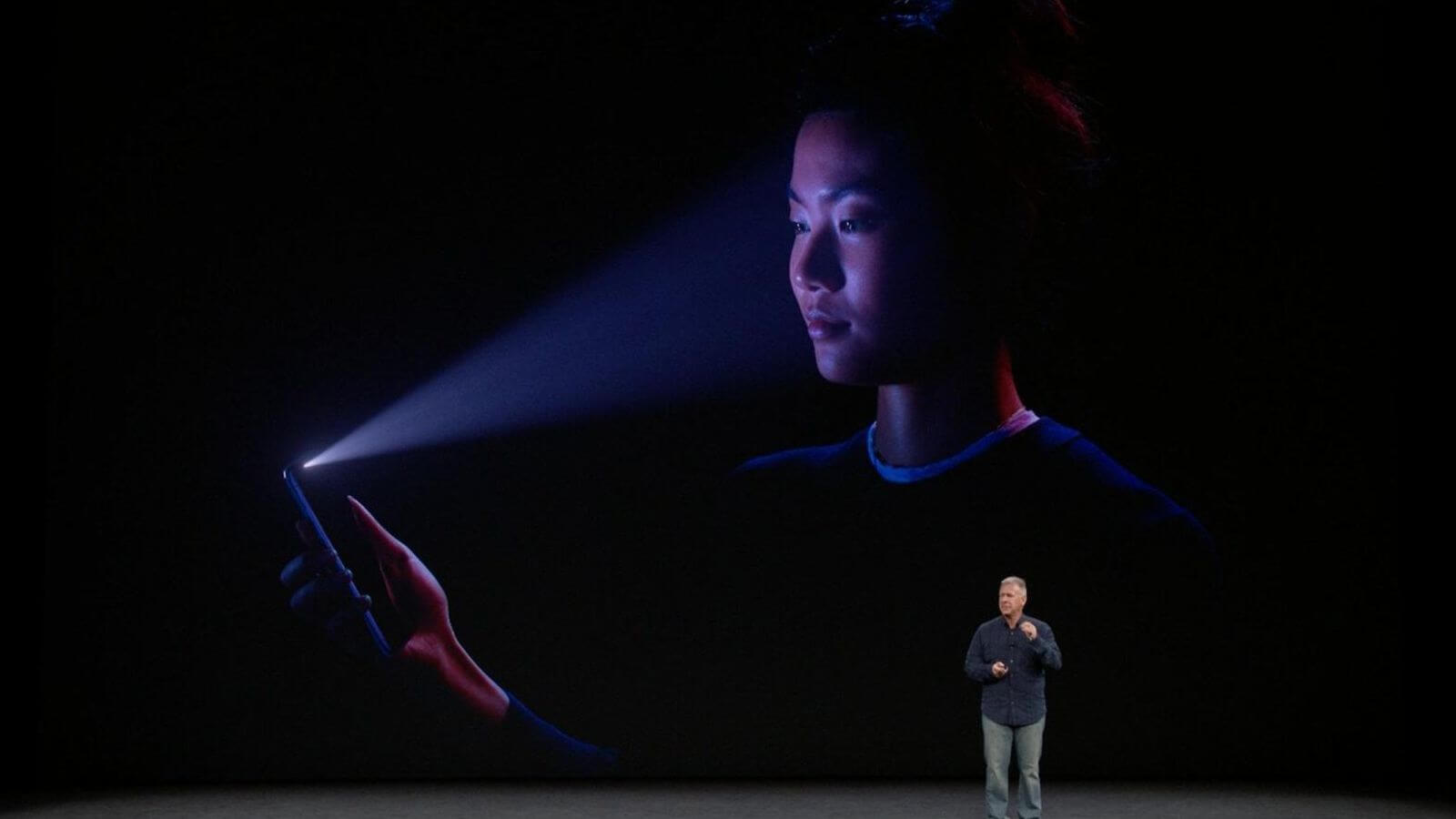
In January 2018, in a D&D Daily "Live from NY" interview, we debated the impact of iPhoneX on FaceID technologies. This new Apple iPhoneX had just placed the disruptive future of facial recognition technology in our pockets.
Less than a year later, it is surprising to observe the continued advanced deployments of FaceID solutions, especially outside the United States. For 2018, the global facial recognition market is valued at $3.97 billion and is estimated to reach $10.15 billion by 2025 at a CAGR of 14.35% during the forecast period.
Unlocking Smartphones with Your Face is Only the Beginning
The Surprising Global Forward March of Facial Recognition - Part 4
In Part 1, we introduced your face as the next computer cookie and discussed USA/UK retail applications.
In Part 2, we faced the reality that more FaceID disruptions is coming to the security industry, introduced healthcare applications, and concluded with GAFAM (Google, Apple, Facebook, Amazon, and Microsoft) investments.
In Part 3, we traveled to China, THE world's leading face recognition innovation laboratory.
In this Part 4, we look at the growing list of emerging FaceID applications, introduce defeating technologies, discuss privacy, and close the series with insights on our digitally connected future. The genie on the potential disruption and business opportunities of face recognition solutions is out of the global bottle.
The Surprising Global Forward March of Facial Recognition - Part 3
China is now THE world FaceID innovation laboratory. Country is installing over 600 million CCTV cameras, see the fining of jaywalkers through video, the pace of Asia digital retail change, and face recognition being deployed in 11,000 7-Eleven stores in Thailand.
In Part 1 of this FaceID article series, we explored retail applications in USA / UK and were introduced to the face as the next computer cookie. Part 2 introduces us to GAFAM and face recognition in the security and health care industry sectors.
Security has been a primary market for face recognition for some time. Threats of terrorism and violent crime have accelerated its adoption by governments and law enforcement worldwide.
STOP, I Can Digitally See You Now
With a 25% CAGR, the security sector is leading facial recognition deployments worldwide.
From London, Tokyo, Helsinki, Rome and now to Atlanta in USA, airports worldwide are adopting FaceID solutions. Delta Airlines will soon roll out ' curb to gate' facial recognition for travelers departing out of the International Terminal F in Atlanta, the first biometric terminal in the United States. Smile for the camera at self-service check-in including baggage, through security checkpoints, and boarding your flight. Using the technology is optional and will save travelers up to nine minutes per flight.
In January 2018, in a D&D Daily "Live from NY" interview, we debated the impact of iPhoneX on FaceID technologies. This new Apple iPhoneX had just placed the disruptive future of facial recognition technology in our pockets.
Less than a year later, it is surprising to observe the continued advanced deployments of FaceID solutions, especially outside the United States. For 2018, the global facial recognition market is valued at $3.97 billion and is estimated to reach $10.15 billion by 2025 at a CAGR of 14.35% during the forecast period.
Unlocking Smartphones with Your Face is Only the Beginning
Very interesting is the mix of the major organizations investing in face recognition. Out of the top 10, eight are academic entities with most based in China. The only USA university that makes the top 10 is Carnegie Mellon. Microsoft leads the top 10 followed by Samsung which already has 186 patents in facial recognition.
Over the next several weeks, in four parts, we will delve into the latest adoption trends of facial recognition. This first post will explore selected USA / UK retail developments and introduce FaceID as your computer cookie.
Continuing the journey to learn something new, we explore the Matterhorn in Zermatt Switzerland. Believed to be 50 to 60 million years old, this world-famous mountain was formed when the African crashed into the European tectonic plate.
The Matterhorn, in Italian known as Monte Cervino and French as Mont Cervin, is the 10th highest mountain in Switzerland at 14,692 feet (4,478 meters). The summit was first reached on July 14, 1865 by a team led by Edward Whymper. During the descent, four members of the team fell to their death. The Matterhorn is one of the most dangerous mountains to climb in the Alps with over 500 deaths to date.
The Matterhorn first appeared on the famous Toblerone chocolate in 1960. Look closely at the mountain on the packaging and you will see a bear. This is a reference to the city of Bern, where Theodor Tobler first invented the chocolate bar.
The town of Zermatt at the base of the Matterhorn bans cars to preserve the Alpine environment. The Theodul glacier which you can access from Zermatt is located at 3883 meters (12,740 feet) and offers the highest elevation ski area in Europe.
Being in nature is my go-to motivational escape to clear my mind and prioritize life priorities. Mountains are an amazing inspirational mental canvas because their massive scale makes everything around you, including your worries, feel small. The raw beauty and quiet wilderness provide perspective.
Find your special natural wonder. Enjoy its beauty. Remember that you are here for a short time, and what is around you will live on. Take chances. Setbacks are miniscule, compared to the possibilities of reaching your peak life nirvana. In the lyrics from the Sound of Music, "climb every mountain, ford every stream, follow every rainbow, 'till you find your dream"
Confidence in physical retail remains solid this year. More than 55% of survey respondents said they feel confident or very confident about brick-and-mortar performance in 2026, while only around 20% expressed concern. - From Place AI Read more
The Number 1 country continued lead reinforces a broader trend: countries with strong institutions, high trust, and robust social safety nets consistently rank highest in life satisfaction. - From Visual Capitalist




 This past week had the opportunity to visit the new Amazon Four-Star physical retail store in New York City. Located in the chic Soho neighborhood, collectively the items in this