Couple weeks ago Inditex, one of the world's largest apparel retailers, went public with their Zara deployment of item level RFID. Pablo Isla, the chairman and CEO, announced that Inditex has already installed RFID at more 700 stores in 22 countries and will complete the rollout of the Zara brand (nearly 2,000 stores) by 2016.
Loss prevention technologies are playing a key role in the deployment of RFID at Inditex. Included in the rollout are dual technology RFID / EAS hard tags, dual technology RFID / EAS point of sale detachers, and a hard tag global re-circulation program.
The Inditex announcement coincides with a ChainLink retail research study on RFID published earlier this year. The top three reasons identified by retailers for deploying RFID included loss prevention in stores, item-level/on floor replenishment from back-stock, and cycle (inventory) counts in stores.
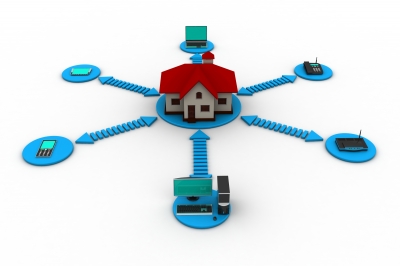
By 2018, the smart home market will reach $71 billion, more than double the $33 billion in 2013. Eighty percent of the current market is driven by entertainment. By 2020, other research points to a $1.7 billion market just for light controls and $1.4 billion for automated thermostats.
This month Time magazine dedicated their cover to a special report on "The Smarter Home". According to Time, the following companies will control your future smarter home:
Tech Titans
Apple - With iOS 8 this fall Apple will release the Apple Homekit. Say "bedtime" to Siri and your Philips internet bulb will turn off.
Google - Followed up $3.2 billion purchase of Next (smart thermostats / smoke detectors) with acquisition of Dropcam (web enabled security cameras.
Latest Retail Shrink Data / Why Do People Steal? / New Technologies
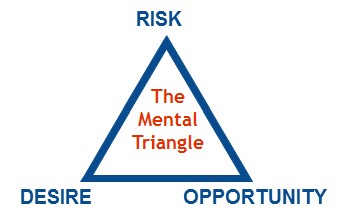
In 2012-2013, global retailers lost $112 billion to shrink or 1.4% of retail sales on average. The top 5 countries with the highest shrink as a percent of sales included Mexico, Brazil, Argentina, USA, and China.
This past week, Jack L. Hayes, published his 26th annual USA Retail Theft Survey. Highlights of this latest report:
The Apple Innovation Model - $7 Billion in 2003 to $171 Billion in 2013
Several recent articles were a great reminder that with the accelerated pace of technology adoption, all business models can be quickly disrupted. Global mobile connectivity, virtual marketplaces, social media, and bypassing linear technology adoption approaches are a few of the trends reshaping the current global economy.
To access a broader market, innovative companies are breaking apart traditional value chains in legacy businesses and targeting higher margin niches to faster growth.
The Industries Apple Could Disrupt Next
"Apple has seemingly served as an anomaly to the theory of disruptive innovation. After all, it grew from $7 billion in 2003 to $171 billion in 2013 by entering established (albeit still-emerging) markets with superior products — something the model suggests is a losing strategy."
Regular trips to Asia, retail customer meetings, APAC industry keynotes, and recent business articles confirm that economically China is going "Back to the Future".
Before USA surpassed it in 1890, China was the world's largest economy. By the end of 2014 China is on track to become the world's number one economy once again. This crowning achievement is arriving 5 years earlier than originally projected by the IMF.
It took 155 years for the UK to double its GDP with about 9 million people in 1870. The USA and Germany took 30 to 60 years with tens of millions of people. China and India, with 100 times the number of people than the UK doubled their GDP in one tenth of the time.
Asia Market / Technology Trends
By 2030, the majority of the world’s population will be considered middle class. China and India will have the largest middle class consumption as a share of the world's total population.
Emerging Markets, Technology Welcomes You to Modern Retail
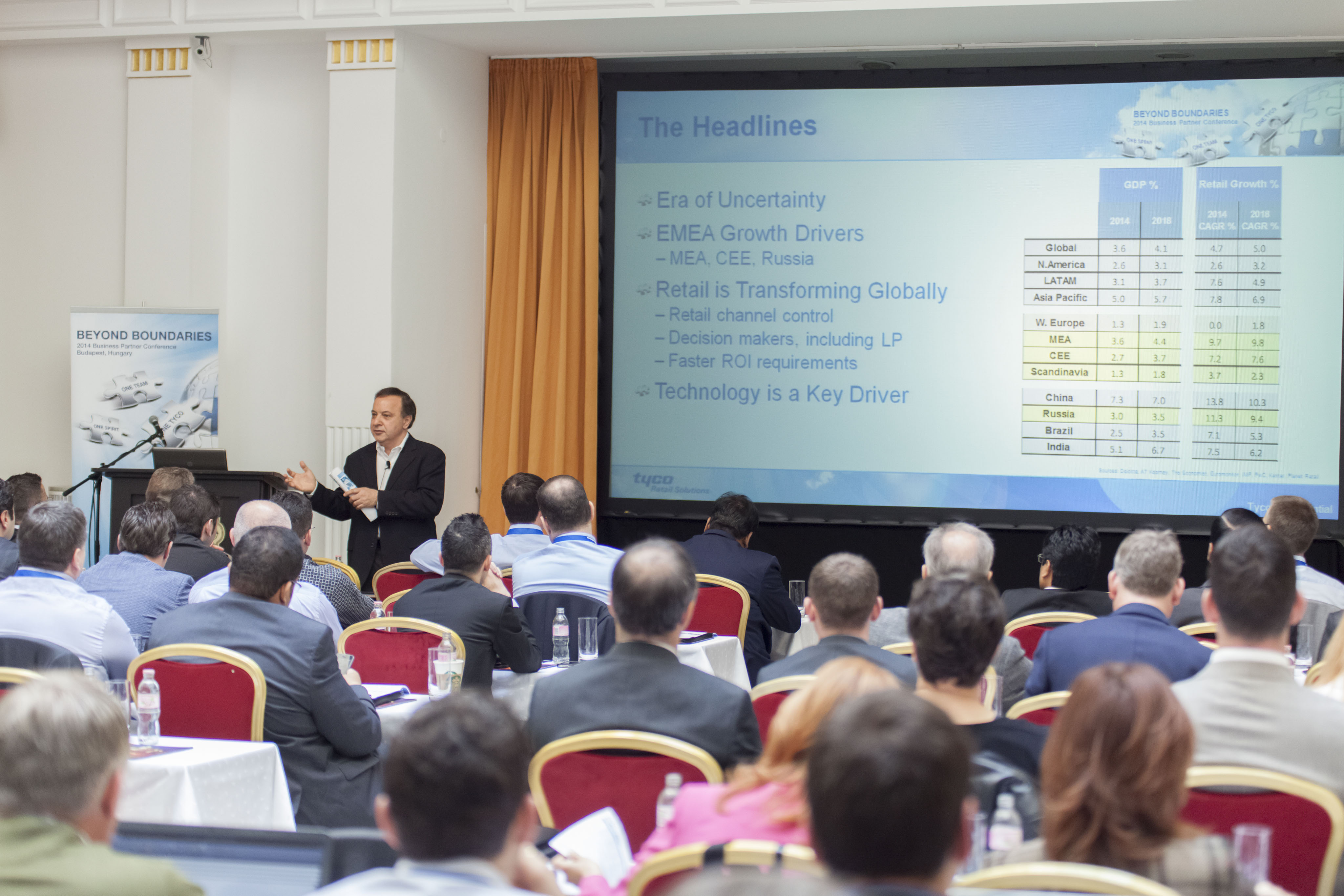
Earlier this month had the pleasure to speak to 100+ business leaders from Central, Eastern Europe, Scandinavia, Russia, and the Middle East at a conference in Budapest Hungary. This week's post summarizes some of the key insights from my presentation titled "The Future of Retail".
European Market Analysis
In EMEA, only the Middle East and Eastern Europe have 2018 retail growth forecasts that outpace the rest of the world. The Middle East is the only region in EMEA where 2018 GDP will grow faster than the world aggregate.
Russia is experiencing some spending slowdown, but it is still an attractive market. The country has become more mature in modern retail and consumers don't necessary fully cut spending during turbulent times. Moscow and St. Petersburg are increasingly saturated, but other cities offer opportunities. 42 cities in Russia have more than 500,000 people. Modern retail shopping space for the size of the country is still in short supply. The food sector is experiencing double digit growth and consumer electronics are growing 30%. Luxury brands see Russia as a key market with wealth increasing.
The brand consultancy agency Interbrand recently published the "Best Retail Brands 2014" report. Quoting directly from the document, following are key ideas from the 136 page report.
North America
Analysts predict that Amazon will soon carry more than 85% of the products sold at leading retailers, including grocery, at better prices, with more delivery and payment options.
A fully functional mobile presence is a given for every brand; the new onmichannel reality has led to a rise in "connected stores for connected customers."
While e-commerce sales continue to grow 10% per year, questions about the role of brick and mortar seem to be largely resolved.
The store is now a brand experience that drives revenue across all channels.
For the past four weeks, a special family moment keeps replaying in my mind. While spending time with my again parents in Italy, I made it a priority to visit my ailing Godfather Uncle Ralph.
Standing next to his hospital bed, we briefly reminisced about the old times, the great Italian card games, the many toasts to a healthy future, the family reunions in his favorite place in the mountains, and the mutual immigrant journeys on multiple continents.
At one point in the conversation, my frail Godfather reached for my hand. Abruptly words melted into silence. Holding hands, we stared into each other's eyes and I started stroking his arm. Our simple handshake was now speaking volumes. Silently, my Godfather was saying goodbye to a lifetime of enduring mutual experiences.
Sadness engulfed our family as less than two weeks later my Godfather passed away.
The somber news led to reflections on five key exemplary lessons of "Greatness" from the celebrated life of my Godfather, Raffaele D'Onofrio.
In an attempt to be closer to one of the global centers of technology innovation, a growing number of retailers are investing in Silicon Valley. Couple examples from the more than a half dozen retail companies making the IT move to California and the innovation gold they are trying to mine:
In February, Walmart opened its second technology center in Silicon Valley. "These centers are tasked with app development and digital coupon projects as well as creating seamless shopping experiences for consumers using online, mobile, social and stores."
In May 2013, Target opened a tech lab in San Francisco. In this center, Target is focusing on mobile apps, online search and social media development, all as foundation to ecommerce expansion.
The growing trend of retailers shaping their own technology development journey is not limited to California:
"A tagline is a slogan that succinctly, memorably, and descriptively sums up a company or product. The art of crafting one is quite complex....A well-constructed slogan can endure in the minds of consumers for years; some taglines have actually outlived their products."
From headlines to taglines, great messaging is composed of exiguous creative words that transcend time. Combining key words into memorable lines started in literature, and then transitioned to other media such as newspapers, radio, movies, and television. The advertising industry turned taglines into a business.
Can you name the company represented by these advertising taglines?
Continuing the journey to learn something new, we explore the Matterhorn in Zermatt Switzerland. Believed to be 50 to 60 million years old, this world-famous mountain was formed when the African crashed into the European tectonic plate.
The Matterhorn, in Italian known as Monte Cervino and French as Mont Cervin, is the 10th highest mountain in Switzerland at 14,692 feet (4,478 meters). The summit was first reached on July 14, 1865 by a team led by Edward Whymper. During the descent, four members of the team fell to their death. The Matterhorn is one of the most dangerous mountains to climb in the Alps with over 500 deaths to date.
The Matterhorn first appeared on the famous Toblerone chocolate in 1960. Look closely at the mountain on the packaging and you will see a bear. This is a reference to the city of Bern, where Theodor Tobler first invented the chocolate bar.
The town of Zermatt at the base of the Matterhorn bans cars to preserve the Alpine environment. The Theodul glacier which you can access from Zermatt is located at 3883 meters (12,740 feet) and offers the highest elevation ski area in Europe.
Being in nature is my go-to motivational escape to clear my mind and prioritize life priorities. Mountains are an amazing inspirational mental canvas because their massive scale makes everything around you, including your worries, feel small. The raw beauty and quiet wilderness provide perspective.
Find your special natural wonder. Enjoy its beauty. Remember that you are here for a short time, and what is around you will live on. Take chances. Setbacks are miniscule, compared to the possibilities of reaching your peak life nirvana. In the lyrics from the Sound of Music, "climb every mountain, ford every stream, follow every rainbow, 'till you find your dream"
Confidence in physical retail remains solid this year. More than 55% of survey respondents said they feel confident or very confident about brick-and-mortar performance in 2026, while only around 20% expressed concern. - From Place AI Read more
The Number 1 country continued lead reinforces a broader trend: countries with strong institutions, high trust, and robust social safety nets consistently rank highest in life satisfaction. - From Visual Capitalist

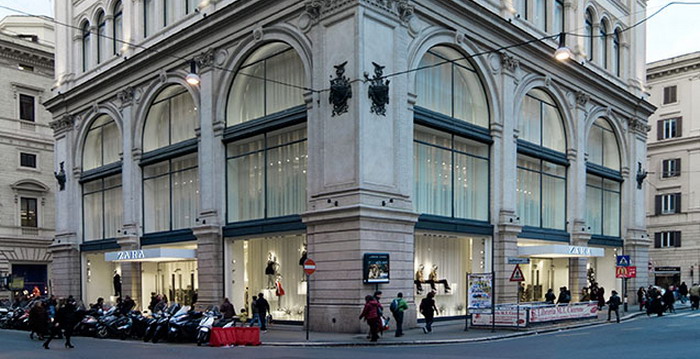 Couple weeks ago Inditex, one of the world's largest apparel retailers, went public with their Zara deployment of item level RFID. Pablo Isla, the chairman and CEO, announced that Inditex has already installed RFID at more 700 stores in 22 countries and will complete the rollout of the Zara brand (nearly 2,000 stores) by 2016.
  driven by entertainment. By 2020, other
  lost $112 billion to
  quickly disrupted. Global mobile connectivity, virtual marketplaces, social media, and bypassing linear technology adoption approaches are a few of the trends reshaping the current global economy.
  going "Back to the Future".
 Earlier this month had the pleasure to speak to 100+ business leaders from Central, Eastern Europe, Scandinavia, Russia, and the Middle East at a conference in Budapest Hungary. This week's post summarizes some of the key insights from my presentation titled "The Future of Retail".
 following are key ideas from the 136 page report.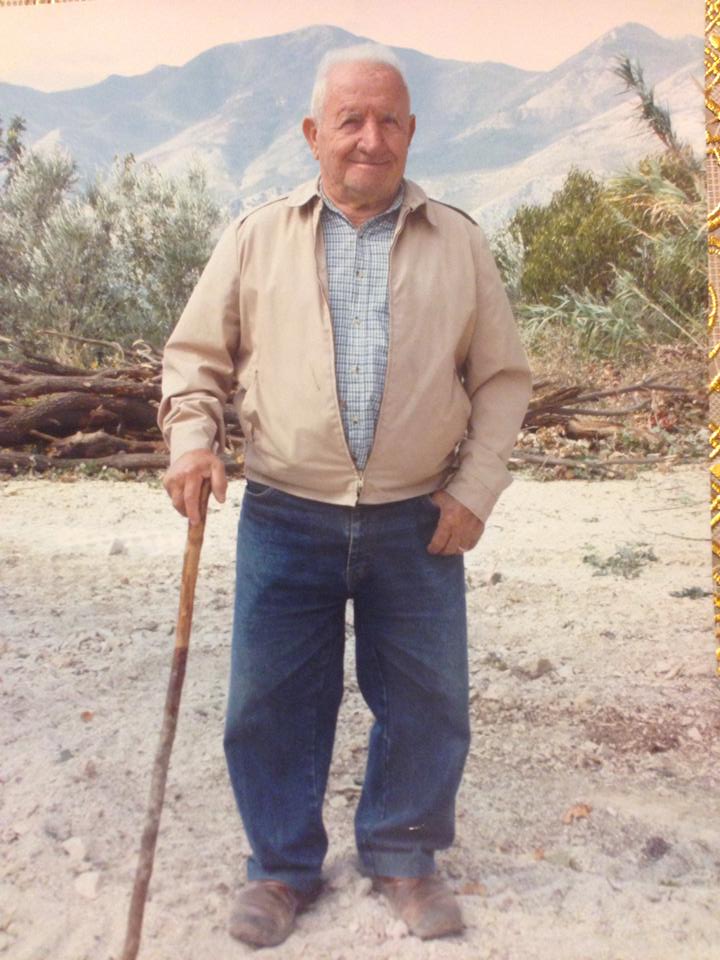
 trying to mine:
 "A
"A