Throughout history, retail technology has evolved in waves. With the industrial revolution and mass manufacturing, the mom & pop store transitioned to the supermarket. The massive amount of data on shipping trends, i.e. what's selling, placed the manufacturers at the center of controlling the information to drive retail sales.
Bar code scanning in the 1970s transitioned the knowledge power base to the retailer. The planogram, i.e. what to actually place on the shelf for sale, was now a retailer decision.
As discussed in a previous post, we are currently in the middle of the next major evolutionary technology wave re-shaping the retail industry. The foundational elements driving the new retail megatrends include:
"Too many people think they know how to lead, not fully understanding what that really means. Foundational elements of great leadership include willingness to work with others, readiness to cooperate, achieving common success goals, and building strong teams. Poor leaders want the position for the power. Exceptional leadership derives from confidence in yourself, knowing who you are, building on your strengths, and leveraging team members to mitigate your weaknesses. Leadership is a team sport." -- Michael D'Onofrio
A Poem on Leadership from guest blogger, my son, Michael Anthony D'Onofrio
Lessons from the Google Acquisition of Nest Technologies
In January, the Economist published a special report on the evolution of technology which they titled "A Cambrian Moment". The premise of the special report is that "cheap and ubiquitous building blocks for digital products and services have caused an explosion in (tech) start-ups." The magazine compares the current convergence of technology trends to the "Cambrian explosion" 540 million years ago when life forms began to multiply.
Every year, the National Retail Federation (NRF) trade event in New York seems to get bigger and more global. 2014 did not disappoint with over 30,000 retail professionals listening to 300+ industry experts and visiting a record 200,000 square feet of exhibit space showcasing the latest technologies. Brazil had once again the largest contingent of attendees outside the United States.
NRF is a great stage on which to reflect the " Big Ideas " that are reshaping retail. The top 10 from NRF 2014 include:
... And Why Three Others Really Matter for a Prosperous New Year
At the start of the New Year, two amazingly confluent appreciable elements came together:
In the German speaking part of Switzerland, 10 Rules of "How to Work Better" painted on a wall in English.
A University that provided the world 12 Nobel Prize laureates.
For the past 12 months, on my regular commute to Neuhausen Am Rheinfall I've struggled from the train to read the "How to Work Better" rules painted on a grey building north of Zurich. Most days could only discern the top 3.
It is that time of the year to look forward at the top 10 key trends that will drive technology adoption in 2014:
Successful technology deployments focus on strengthening the brand
According to Deloitte, brand value declined in 2013, for the third year in a row. To win in 2014, companies will need to go back to basics by selectively deploying technologies that protect and grow global brand value.
Have recently become fascinated by the early market examples of wearable technologies and their future possibilities for improved professional and personal productivity. Leading the pack:
Google has an entire web site dedicated to Google Glass. In a highly graphical fashion, Google asks you to imagine that next bike ride, creating that perfect meal, instant visual language translations, picking the ideal golf club for the distance, and composing that perfect song.
The first weekend of November happened to be in my Italian hometown during the annual tradition of memorializing fallen soldiers and civilians from past wars. November 4th, which is now celebrated on the first Sunday of the month, has dual significance for the Italians. It is known as the Holiday of National Unity and also the day to recognize the Armed Forces. Historically, this date celebrates the Italian victory over the Austria-Hungary Empire in 1918, unifying and ending World War I for the country.
Early that Sunday morning, the sound of the marching "Bersaglieri" military band piqued my interest. On this day did not expect to become a witness of emotional traditions celebrating the past which very quickly translated into new lessons for the future.
Product or service differentiation has always been a strategy adopted by the retail industry towards finding that winning formula for growth. Differentiation can take many forms and include price, product quality, store decor, targeted consumer audience, and the business model itself. Two recent examples of successful retail differentiation:
Zara and Fast Fashion
Forbes Magazine recently recapped the successful Zara business model. A team of designers and product managers in Spain oversee design, sourcing and production of specific apparel categories. These individuals monitor closely the sales process of each apparel collection -- from the time the merchandise reaches the stores to the real time customer response.
-- How Piggly Wiggly Built Today's Self-Checkout Legacy --
"An invention acts rather like a trigger, because, once it's there, it changes the way things are, and that change stimulates the production of another invention, which in turn causes change, and so on. Why those inventions happened between 6,000 years ago and now, where they happened, and when they happened , is a fascinating blend of accident, genius, craftsmanship, geography, religion, money, ambition..." (1) -- James Burke
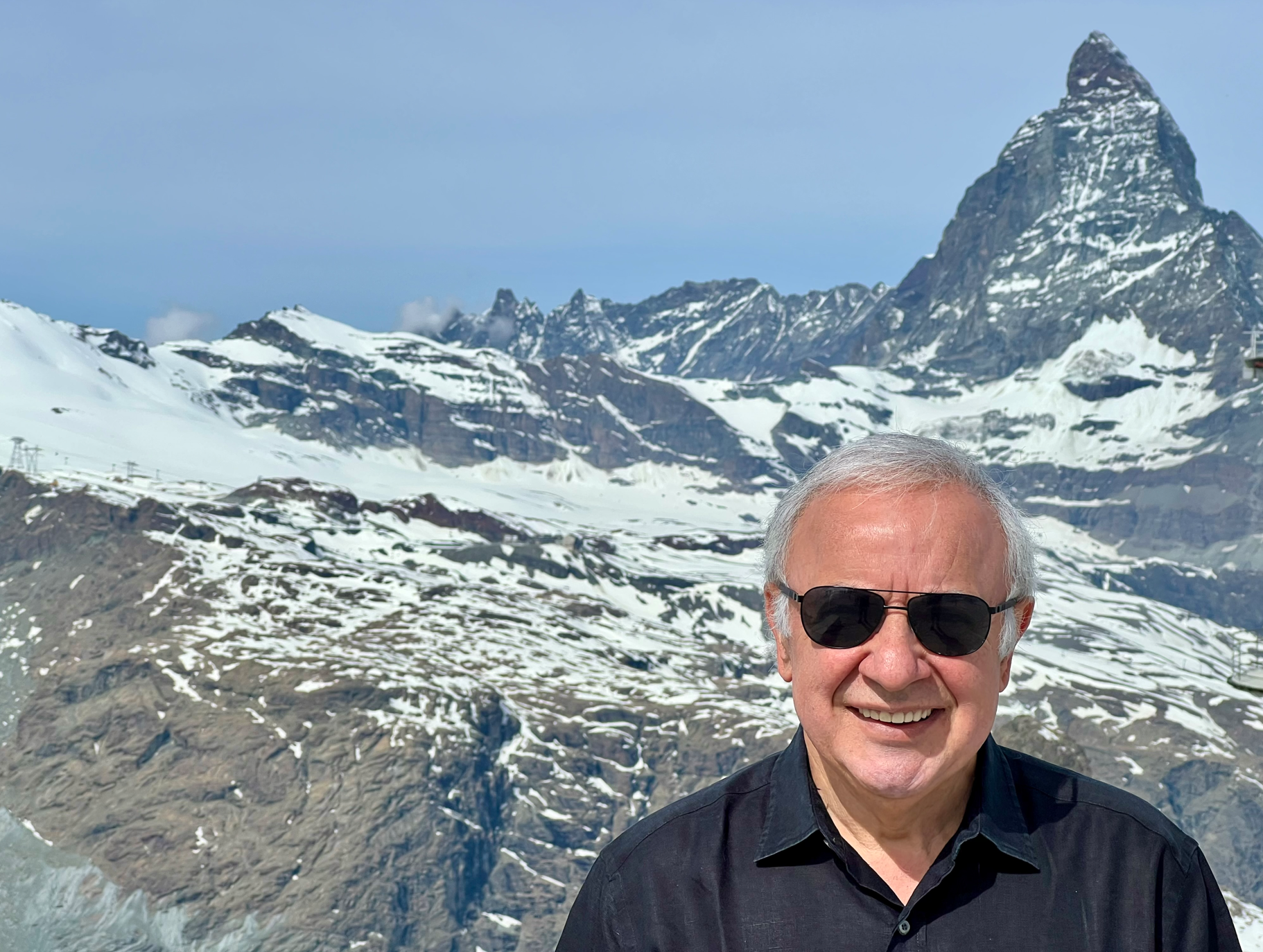
Continuing the journey to learn something new, we explore the Matterhorn in Zermatt Switzerland. Believed to be 50 to 60 million years old, this world-famous mountain was formed when the African crashed into the European tectonic plate.
The Matterhorn, in Italian known as Monte Cervino and French as Mont Cervin, is the 10th highest mountain in Switzerland at 14,692 feet (4,478 meters). The summit was first reached on July 14, 1865 by a team led by Edward Whymper. During the descent, four members of the team fell to their death. The Matterhorn is one of the most dangerous mountains to climb in the Alps with over 500 deaths to date.
The Matterhorn first appeared on the famous Toblerone chocolate in 1960. Look closely at the mountain on the packaging and you will see a bear. This is a reference to the city of Bern, where Theodor Tobler first invented the chocolate bar.
The town of Zermatt at the base of the Matterhorn bans cars to preserve the Alpine environment. The Theodul glacier which you can access from Zermatt is located at 3883 meters (12,740 feet) and offers the highest elevation ski area in Europe.
Being in nature is my go-to motivational escape to clear my mind and prioritize life priorities. Mountains are an amazing inspirational mental canvas because their massive scale makes everything around you, including your worries, feel small. The raw beauty and quiet wilderness provide perspective.
Find your special natural wonder. Enjoy its beauty. Remember that you are here for a short time, and what is around you will live on. Take chances. Setbacks are miniscule, compared to the possibilities of reaching your peak life nirvana. In the lyrics from the Sound of Music, "climb every mountain, ford every stream, follow every rainbow, 'till you find your dream"
Confidence in physical retail remains solid this year. More than 55% of survey respondents said they feel confident or very confident about brick-and-mortar performance in 2026, while only around 20% expressed concern. - From Place AI Read more
The Number 1 country continued lead reinforces a broader trend: countries with strong institutions, high trust, and robust social safety nets consistently rank highest in life satisfaction. - From Visual Capitalist


 supermarket. The massive amount of data on shipping trends, i.e. what's selling, placed the manufacturers at the center of controlling the information to drive retail sales.
  willingness to work with others, readiness to cooperate, achieving common success goals, and building strong teams. Poor leaders want the position for the power. Exceptional leadership derives from confidence in yourself, knowing who you are, building on your strengths, and leveraging team members to mitigate your weaknesses. Leadership is a team sport." -- Michael D'Onofrio
 of the special report is that "cheap and ubiquitous building blocks for digital products and services have caused an explosion in (tech) start-ups." The magazine compares the current convergence of technology trends to the "Cambrian explosion" 540 million years ago when life forms began to multiply.
 Every year, the National Retail Federation (NRF) trade event in New York seems to get bigger and more global. 2014 did not disappoint with over 30,000 retail professionals listening to 300+ industry experts and visiting a record 200,000 square feet of exhibit space showcasing the latest technologies. Brazil had once again the largest contingent of attendees outside the United States.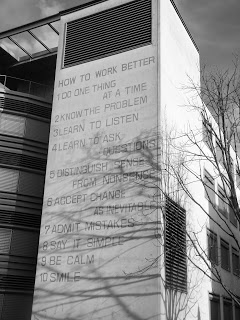
 Successful technology deployments focus on strengthening the brand
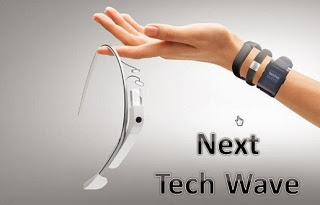 professional and personal productivity. Leading the pack:
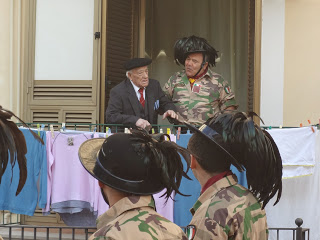 and civilians from past wars. November 4th, which is now celebrated on the first Sunday of the month, has dual significance for the Italians. It is known as the Holiday of National Unity and also the day to recognize the Armed Forces. Historically, this date celebrates the Italian victory over the Austria-Hungary Empire in 1918, unifying and ending World War I for the country.
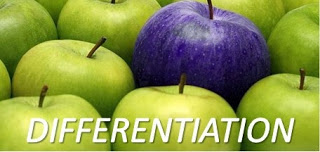 growth. Differentiation can take many forms and include price, product quality, store decor, targeted consumer audience, and the business model itself. Two recent examples of successful retail differentiation:
 production of another invention, which in turn causes change, and so on. Why those inventions happened between 6,000 years ago and now, where they happened, and when they happened , is a fascinating blend of accident, genius, craftsmanship, geography, religion, money, ambition..." (1) -- James Burke