


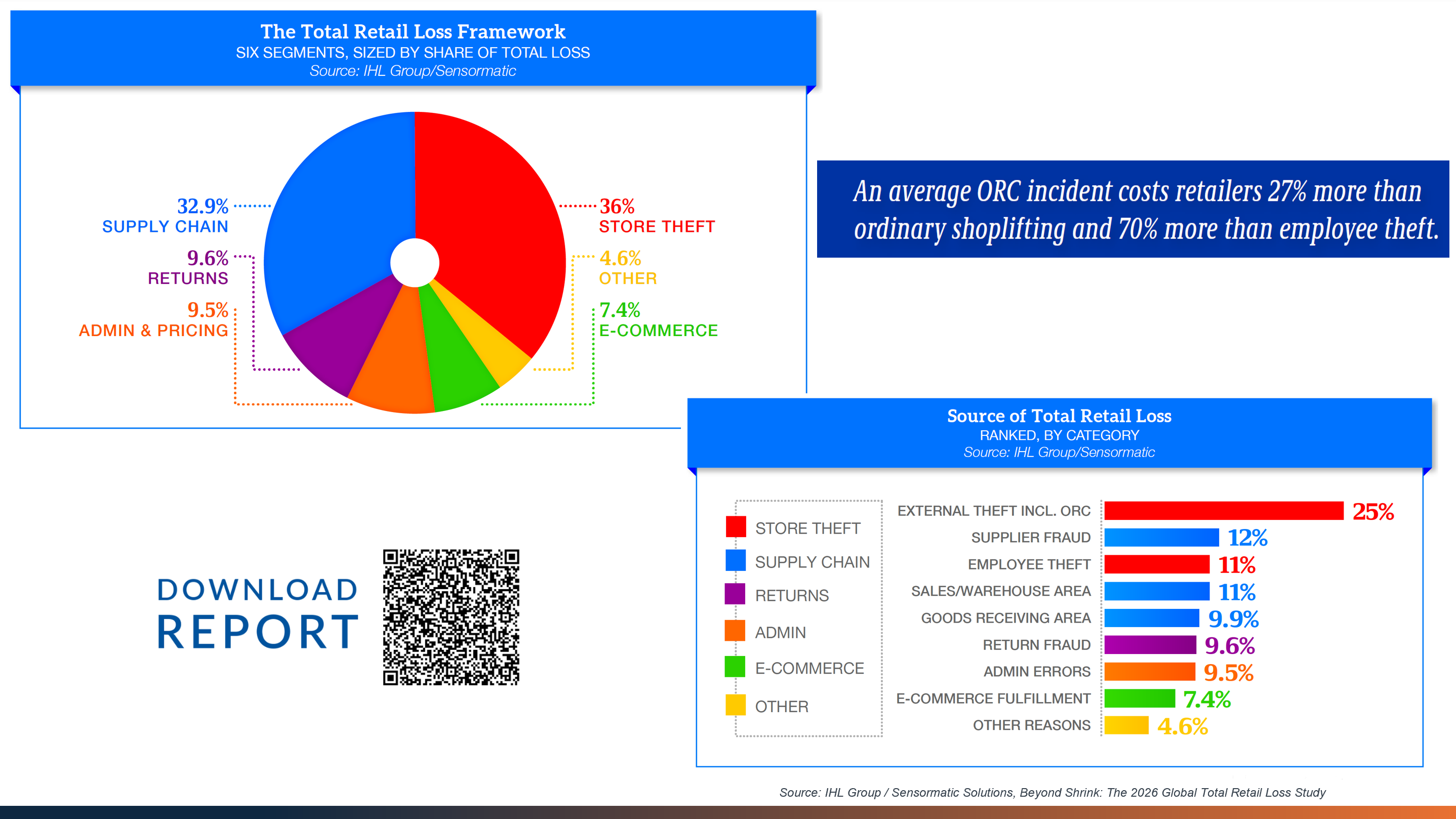
Most retail loss conversation seem to start in the same place: a shoplifter walking out the front door. The new IHL Group and Sensormatic study, “Beyond Shrink: 2026 Global Total Retail Loss,” surveyed 1,421 retailers across twelve countries to show just how incomplete that picture has become. External theft, including organized retail crime, is real and rising, but it accounts for only 25 percent of what retailers actually lose. The other 75 percent is where this report breaks new ground, and where most of the real surprises live.
That other 75 percent breaks down across supplier fraud, employee theft, warehouse and receiving discrepancies, return fraud, administrative errors, and e-commerce fulfillment loss. Sixty four percent of total retail loss never involves a shoplifter at all. This percentage was surprising.
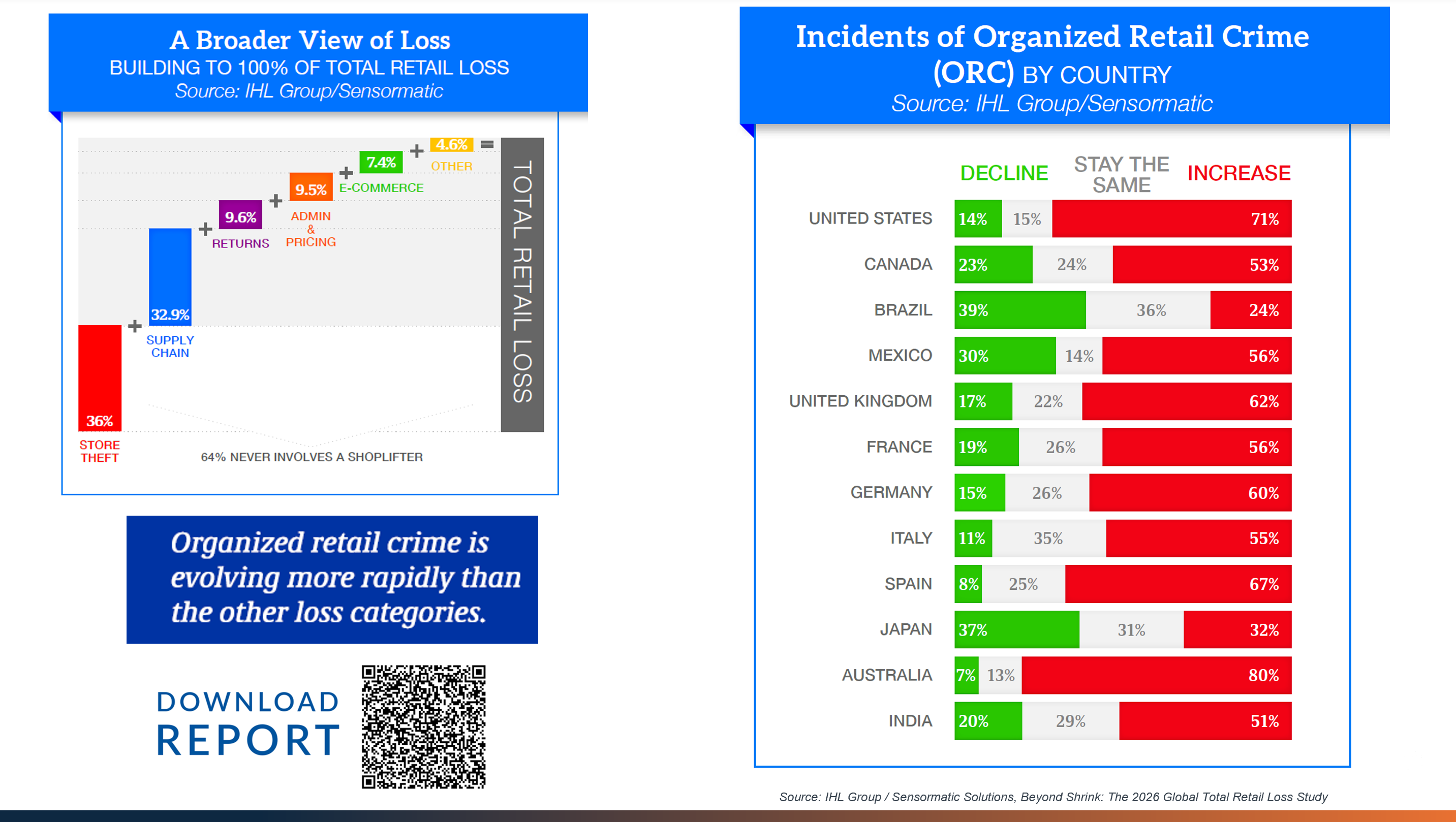
The study’s timing matters as much as its scope. IHL and Sensormatic found that theft had actually begun improving earlier in 2025, until the war in Iran pushed fuel prices up and reversed the trend almost everywhere at once. Across all six loss categories tracked, 54 to 69 percent of retailers now report increases year over year. The economy turns out to be the real variable moving these numbers, well ahead of store design or staffing levels.
My favorite surprise in the whole study is what happens to the ranking once you isolate urban retailers. Globally, external theft leads at 25 percent, well ahead of anything else. But among retailers with at least 70 percent of stores in cities, supplier fraud and goods-receipt discrepancies take the top spot at 19 percent, edging out external theft at 18. Retailers have spent a decade hardening the front door. The back door and the loading dock, it turns out, are often the easier target, and almost nobody was watching.
A close second surprise sits in the cost data. An administrative process error costs retailers 103 dollars and 40 cents per incident, nearly matching the 107 dollars lost to a single employee theft incident. Fixing paperwork errors can deliver financial benefits comparable to stopping a shoplifter, a case almost never made in a loss prevention budget meeting.
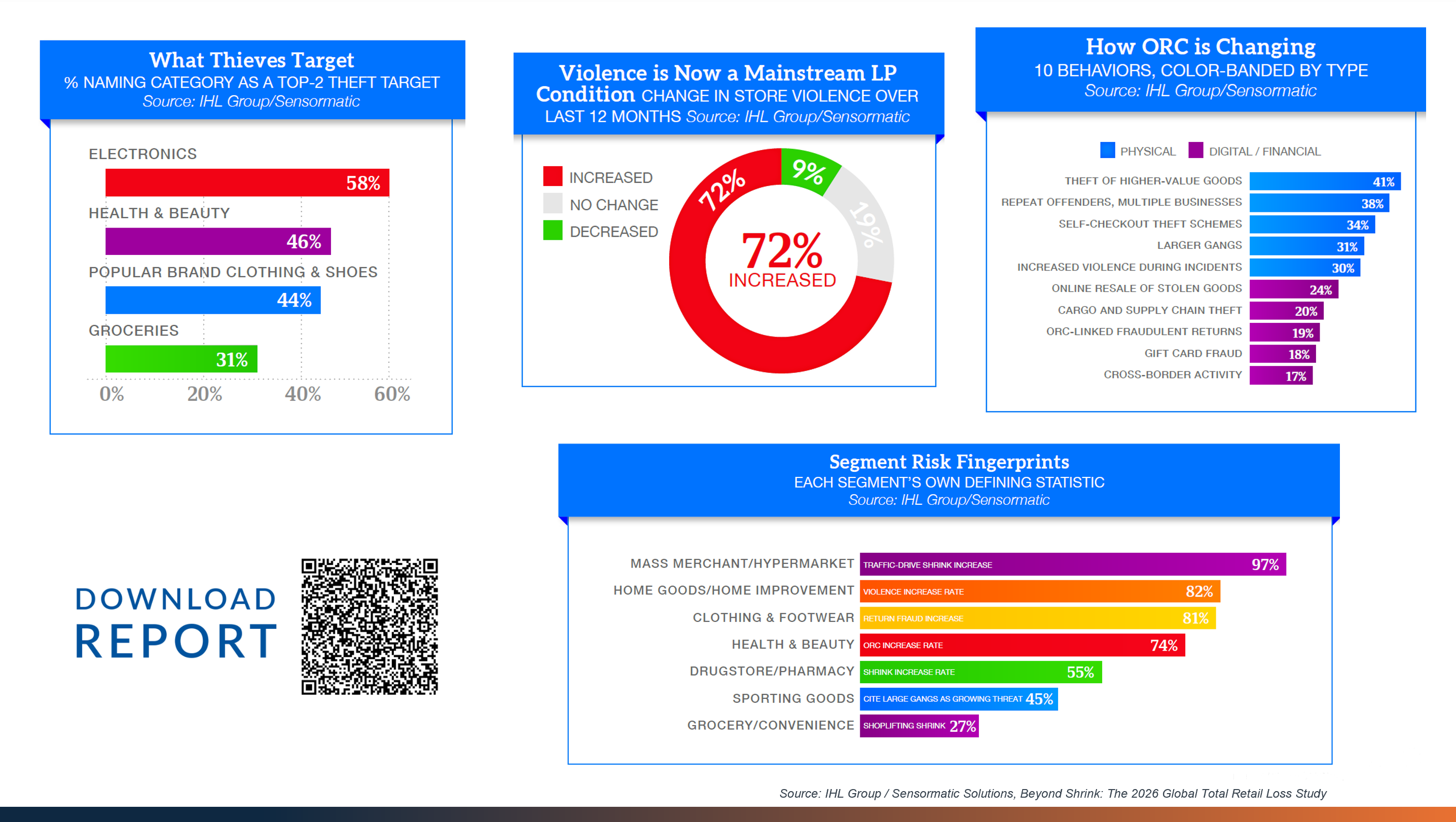
Return fraud deserves a mention too. It is increasing for 68 percent of retailers and declining for just 10 percent, the worst ratio of any category tracked and barely behind shoplifting’s own 69 percent increase rate. Organized retail crime has already moved into this channel: ORC-linked fraudulent returns now account for 19 percent of reported ORC activity. The average ORC incident runs 182 dollars, a 27 percent premium over ordinary shoplifting, which explains exactly why organized groups keep gravitating toward it.
Then there is what the report calls the electronics paradox, and it is the finding I keep coming back to. Electronics is the most frequently targeted category in the study, named by 58 percent of retailers, and it carries some of the most severe individual theft incidents. Yet electronics retailers represent just 1.9 percent of the companies in the highest loss prevention technology spending tier, against a study average of 27 percent. The category under the most pressure is, somehow, among the least protected.
Australia tells a similar story at the country level. It posts the highest organized retail crime growth in the entire study, 80 percent of retailers reporting increases, yet it also reports the lowest loss prevention investment of any country surveyed. The market facing the sharpest pressure carries the least funding behind it. Brazil runs in the opposite direction, the only country where declining violence, 41 percent, nearly matches increasing violence, 40 percent, a genuine outlier worth watching as a possible model for everyone else.
One more surprise, and it is a quiet one. Facial recognition has proven results in this research, yet it ranks near the bottom of planned technology investment, held back by regulation and public relations concerns rather than performance. Meanwhile EAS tags, a decades old technology, rank right alongside computer vision as the top investment priority for the next two years. Retailers are doubling down on what already works, not chasing the newest tool on the shelf.
The through line across all of it is the 2 percent threshold. Retailers investing more than 2 percent of revenue in loss prevention are the only group consistently holding the line on total loss, 57 percent reporting no change and 32 percent reporting declines. Everyone else funds the same narrow band, 1.1 to 1.3 percent of sales worldwide, regardless of how much risk they actually carry.
The shoplifter at the front door was never the whole story, and the retailers who have figured that out are already funding the other 75 percent.
Click Beyond Shrink: The 2026 Global Total Retail Loss Study to download research or scan QR code in charts.