


Disturbingly Younger People Finding Retail Theft Acceptable
Retailers across the United States, the United Kingdom, and Australia are confronting a shifting landscape of crime that is reshaping store operations, staffing, and the customer experience. Once dominated by opportunistic shoplifting, modern retail crime now spans sophisticated, organized networks, increasing instances of violence, and a growing mix of in-store and online fraud. These trends are driving higher losses, rising security costs, and mounting pressure on policymakers and industry leaders to find practical, rights-respecting responses that restore safety without alienating legitimate customers.
In the United States, the picture is marked by a surge in organized retail theft and an alarming rise in violent incidents. High-profile episodes and viral video-sharing have amplified public concern, while supply-chain vulnerabilities and resale markets—both offline and online—have created more profitable avenues for stolen goods. Retailers respond with fortified loss-prevention teams, technology investments such as AI-powered cameras and inventory analytics, and closer collaboration with law enforcement, yet many report inconsistent legal outcomes and limited deterrence from existing penalties.
The United Kingdom’s retail sector faces its own distinct pressures. Persistent shoplifting, increases in “grab-and-run” thefts, and an uptick in violence against staff have prompted widespread calls for tougher sentences and more consistent policing. At the same time, austerity-era reductions in policing capacity and court backlogs have frustrated retailers seeking swift redress. Technology adoption—ranging from heat-mapping for store layouts to digital evidence-sharing platforms—has helped some chains reduce losses, but smaller independent shops remain especially vulnerable.
Australia reflects a blend of the UK and US dynamics: noticeable growth in organized retail crime and repeat offending, alongside rising concerns about aggressive behavior toward frontline staff. Geographic dispersion and differing state-level legal frameworks produce uneven enforcement outcomes, prompting national industry bodies to push for coordinated reforms and better data-sharing. Retailers across Australia are increasingly investing in training, protective store design, and partnerships with community groups to mitigate risk while preserving accessibility and service.
Together, these regional snapshots reveal common drivers—organized resale markets, the interplay between online and physical theft, and constrained public resources—that complicate straightforward solutions. Yet differences in legal frameworks, policing models, and retail structures shape how each country experiences and addresses the problem. Understanding both the shared patterns and unique local factors is essential for crafting responses that reduce harm, support workers, and sustain a healthy retail environment.
Persistent Growing Retail Crime in the United States
The latest National Retail Federation (NRF) Retail Theft and Violence Report "documents the persistent and growing threats facing the retail sector, including daily events involving theft, fraud and acts of violence."
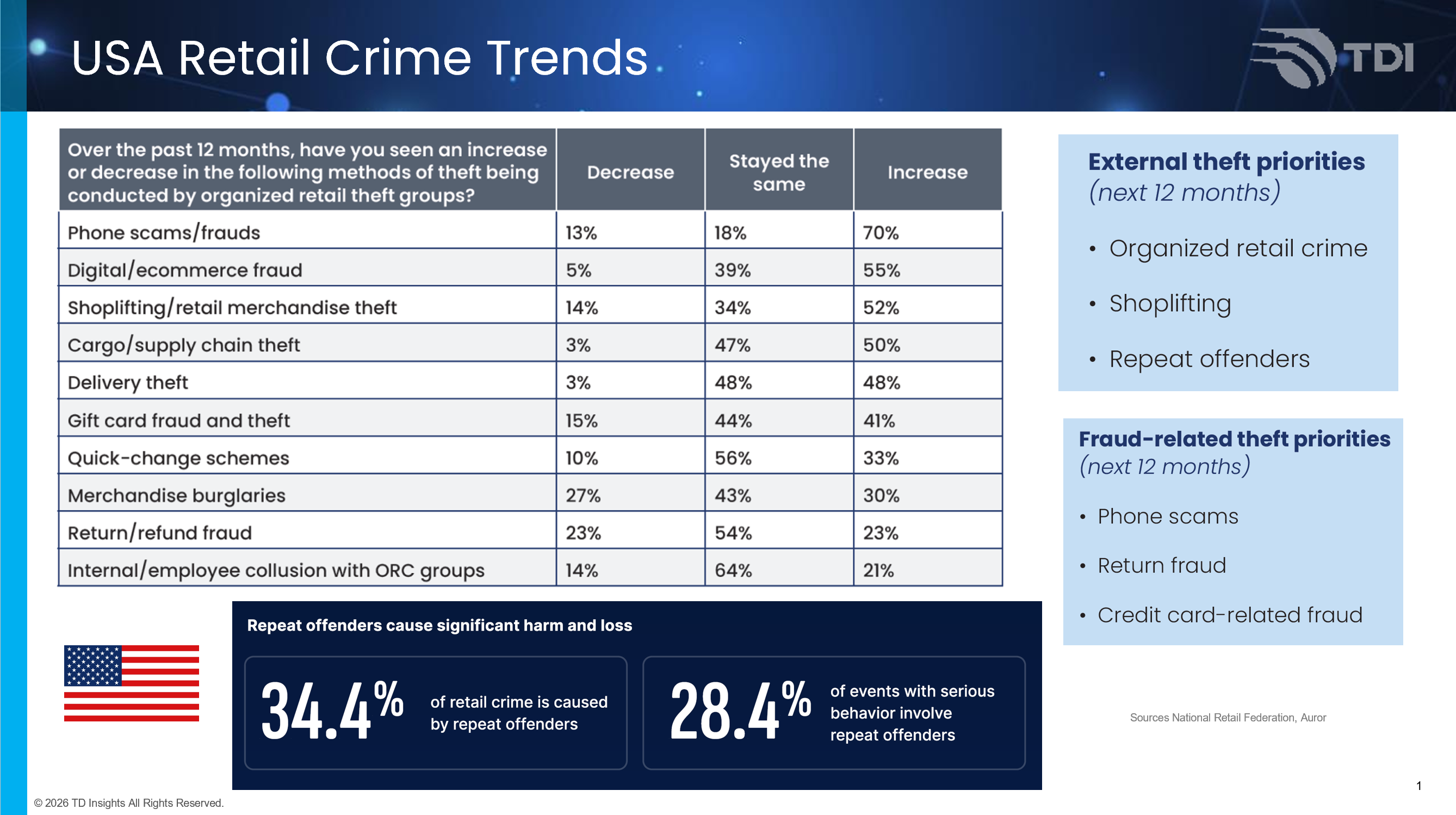
The top 3 external theft priorities are organized retail crime (ORC), shoplifting, and repeat offenders. The top 3 fraud-related theft priorities are phone scams, return fraud, and credit card-related fraud. In the United States, 10% of offenders cause 68% of total theft event value, a slight increase from the 65% a year earlier. "This is in line with the global trend Auror has documented over the years: 60% to 70% of loss and harm comes from just the top 10% of offenders."
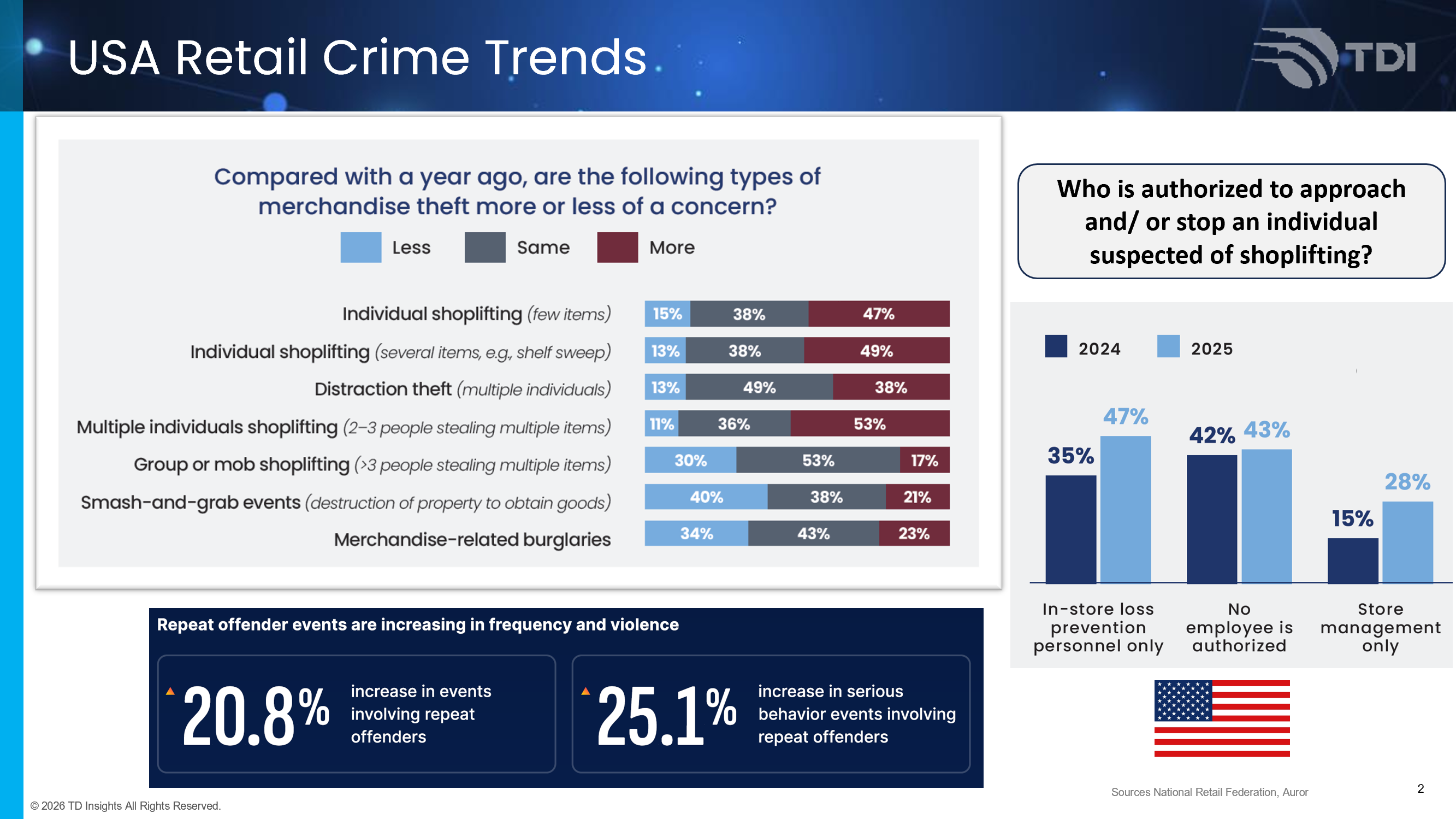
As NRF reported in their latest study, there is no single type of shoplifter. "Compared with last year, retailers are now most likely to be more concerned about multiple individuals shoplifting together to steal multiple items;
individuals shoplifting several items at once; and individuals coming in to shoplift a few items."
Shoplifting apprehensions increased 28% over the previous year, while shoplifting arrests grew 15% during the same time period. Retailers are still limiting who can approach shoplifters.
Technology continues to play a major role in attacking retail crime.
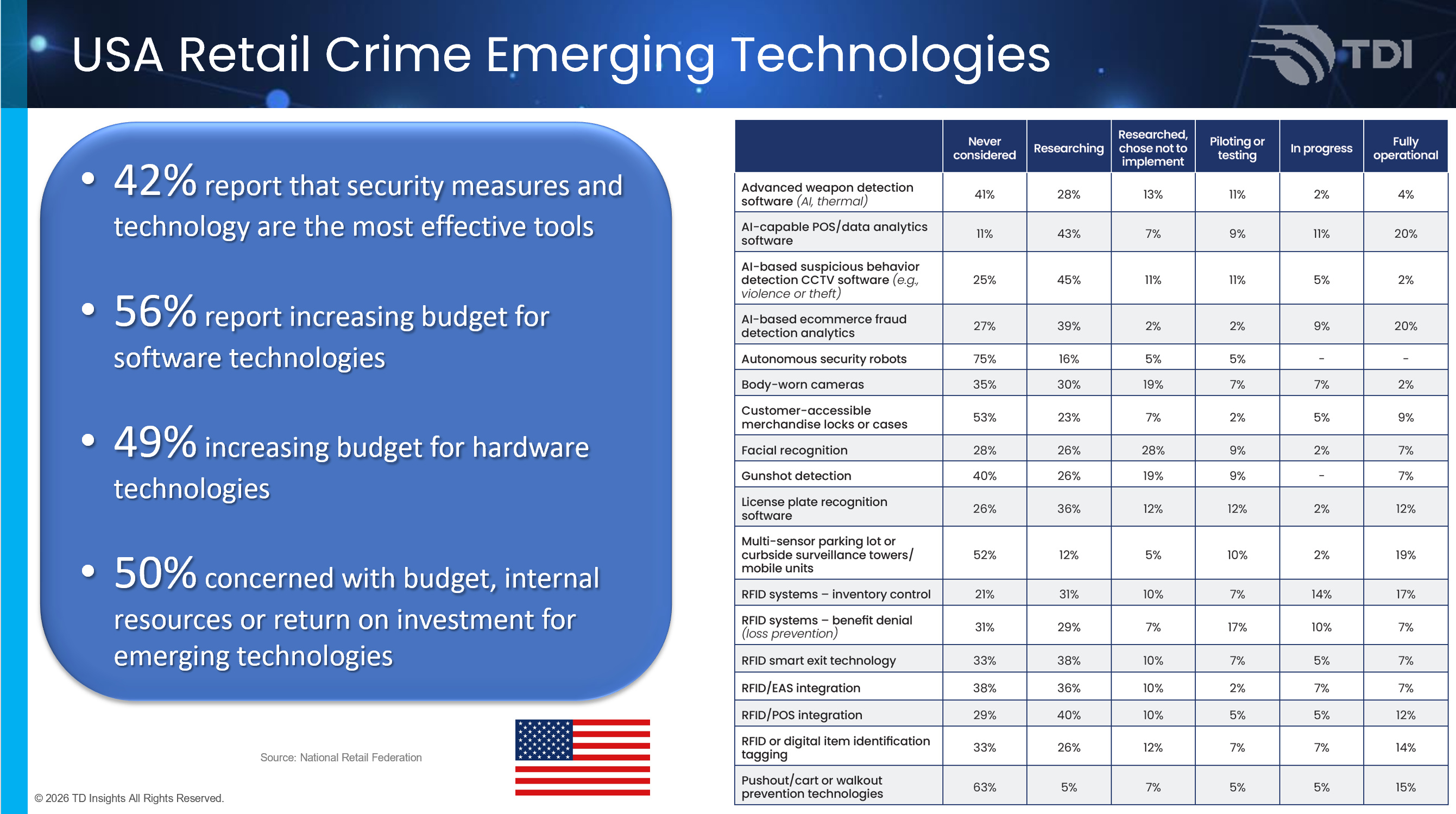
Note the increased interest in Artificial Intelligence (AI) and RFID solutions as it relates to emerging technologies.
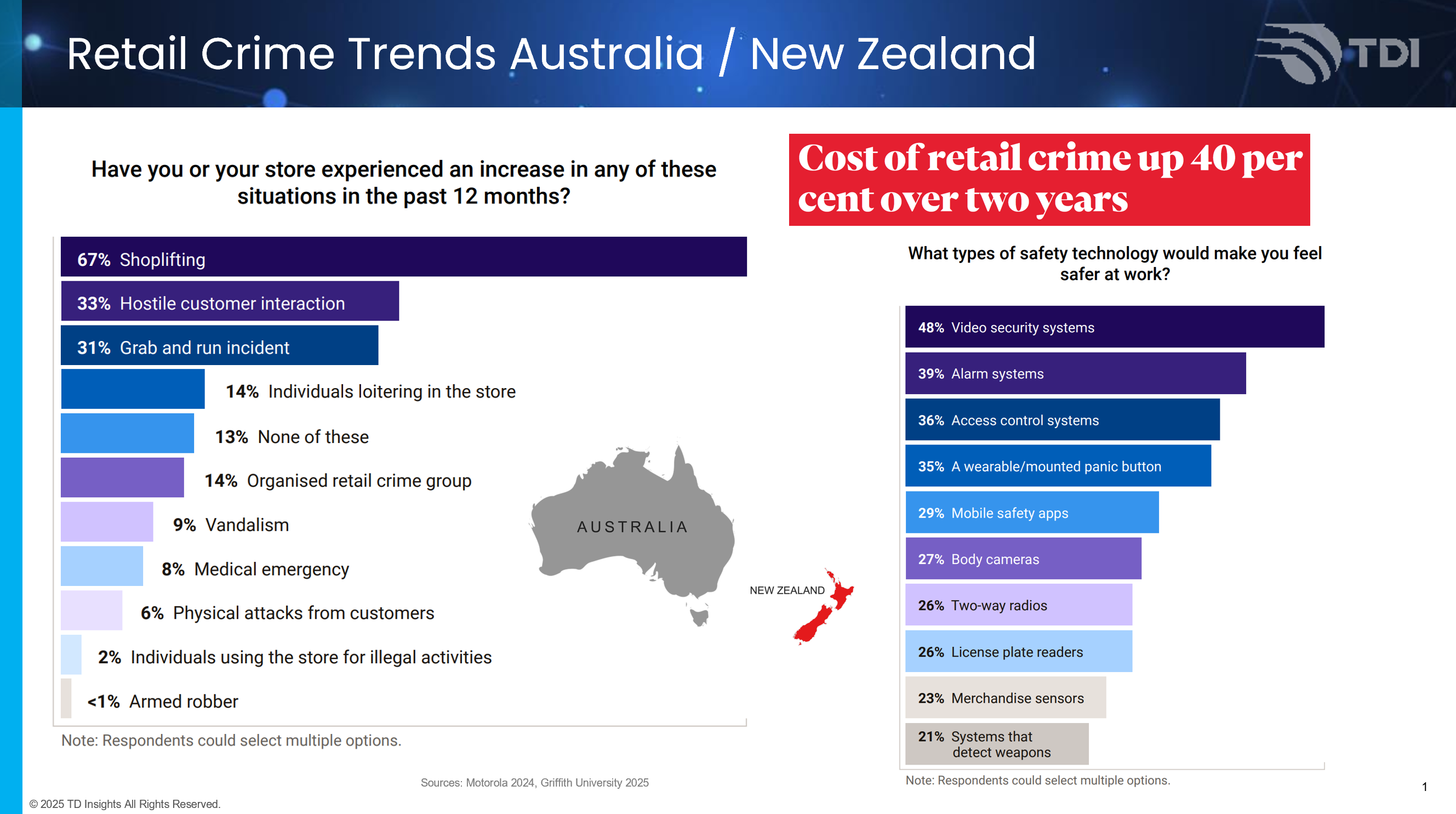
Retail Theft is the New Reality in Australia
The disturbing trend in Australia is that nearly 54% of consumers aged 38 to 34 see some degree of theft as acceptable. "This includes behaviors like changing price tags, skipping scans at self-checkout, or scanning cheaper items to save a few dollars. Younger consumers are the most permissive, signaling a social shift that retailers and executives can no longer ignore."
A similar younger people theft paradigm is growing in the United States. Forty-one percent of Millennials and 37% of GenZers admit to have taken at item at self-checkout without scanning it.
In Australia, 62% of stolen retail value came from just 10% of the persons of interest. "According to the Australian Bureau of Statistics (ABS), theft incidents in 2024 reached the highest level in 21 years, with 595,660 victims of theft nationally — up 6 % on the prior year. Strikingly, almost half (45%) of those incidents occurred in retail settings, making stores the most frequent target of theft and related crimes." Similar to the USA and UK, reports from major retailers show increases in threatening and violent incidents toward staff.
Customer Theft Firmly Embedded Across the United Kingdom
Some good news in the UK as there are early signs of progress in combatting retail theft. Violence and abuse against store associates has fallen from 2,000 incidents a day to 1,600. "Improvements in police response, stronger partnership working between retailers, government and policing, and sustained investment by retailers - almost £5.5 billion over the past five years - are beginning to make a difference."
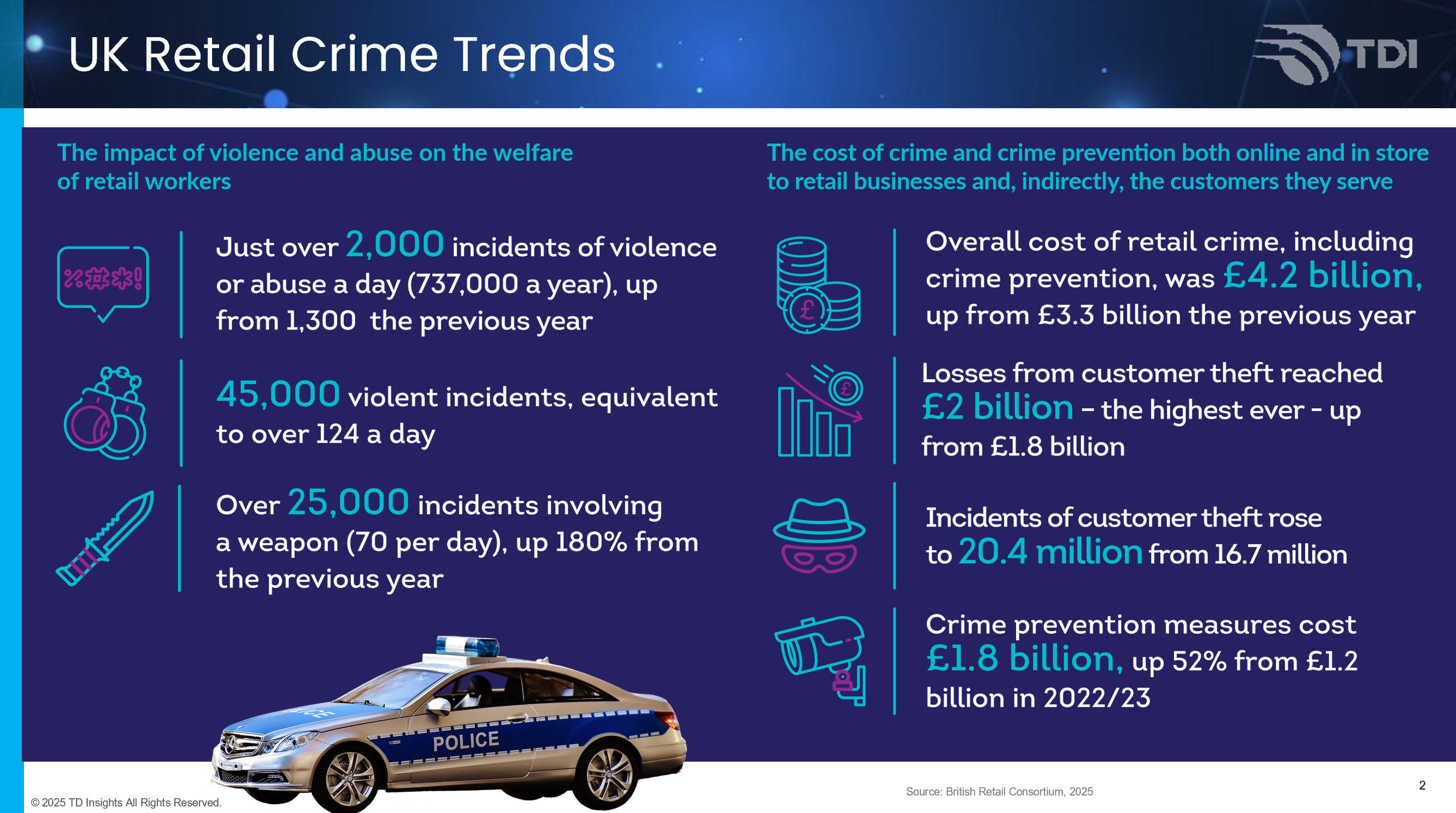
"However, the scale of the problem remains unacceptable. Incidents are still far higher than the pre-pandemic level of 455 per day in 2019-20. Any level of abuse is too high. Violence and abuse continue to have a profound impact on staff wellbeing, confidence and retention, and there is much more to do."
The number of physically violent incidents remained largely unchanged at 43,000 incidents, compared with 45,000 in 2025. Although the slight decline is welcome, levels have remained worryingly consistent over recent years. It is encouraging that retailers are now reporting the majority of these incidents (55% of incidents), and that police attend just over two in five cases.
Retail crime is rising across the United States, the United Kingdom, and Australia, evolving from opportunistic shoplifting into more organized, often violent, and technologically enabled forms of theft and fraud. Common drivers include organized resale markets, the blending of online and in-store theft, and constrained public resources. Responses vary by country but share emphasis on stronger loss-prevention teams, technology (AI, RFID, cameras, analytics), and greater collaboration with law enforcement.