
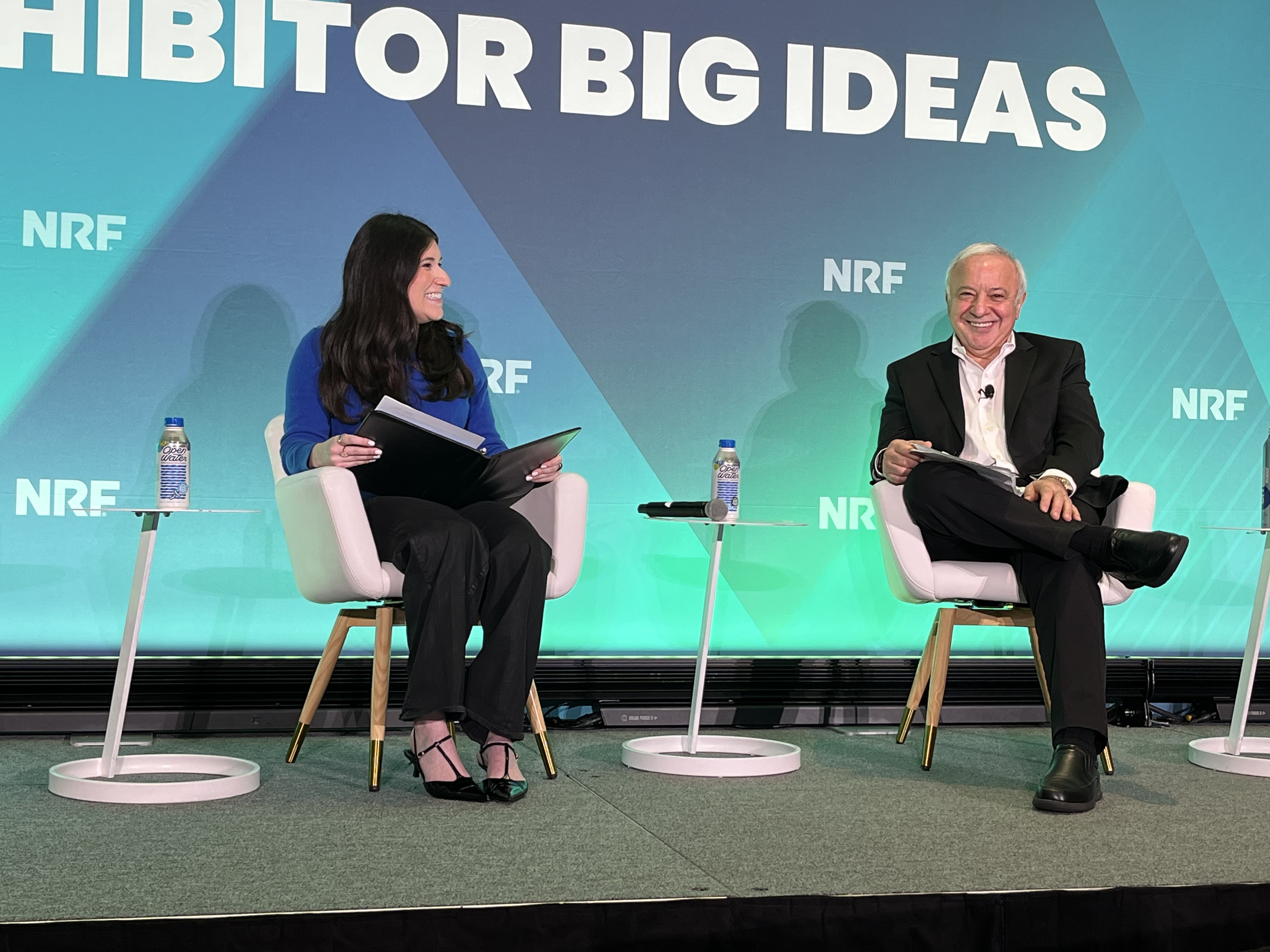
It seems to be an eternity, but is has only been a couple of weeks since the end of the National Retail Federation Big Show in New York. As I do every year, it is time to summarize my key takeaways.
The 2026 theme was “The Next Now” and it included representation of 5000+ brands from 100+ countries joining 40,000+ people in New York City for the annual retail pilgrimage.
For me personally, this event is very exhausting. During my action packed five days of retail events, I tracked 81,297 steps (38.5 miles / 62 km) shuttling between many meetings, celebrations, meeting friends, and for a couple of days three dinner per night. Though was voice failed me by the end, I loved every single minute of it.
This article summarizes my top 5 game changing innovation NRF moments -- from finding the real Retail ROI on day one, the frenzied few days in the Jacob Javits Convention Center, and concluding with the annual kickoff of the Loss Prevention Research Council. It is a data centric review of the continuous evolutionary improvement of the retail industry as confirmed by NRF 2026.
Finding the Real Retail ROI
A tradition that I have supported every year is attending the Retail Orphan Initiative (RetailROI) which is held every Saturday in New York, prior to the start of the Big Show. Celebrating its 17th year, RetailROI once again brought together nearly 300 retailers and solution providers into what has been affectionally labeled as a day of “Tech & Tears.”
The Purpose of the Retail Orphan Initiative (RetailROI) is to raise awareness and provide real solutions for the more than 400 million vulnerable children worldwide. Since its founding, RetailROI has raised $6.4 million for this cause.
It is labeled “Tech & Tears” because the near full day event provides both valuable industry technology updates and emotional stories on how vulnerable children are being helped around the world by RetailROI.
This year’s edition featured a great retail technology check CI&T presentation from a consumer point-of-view.
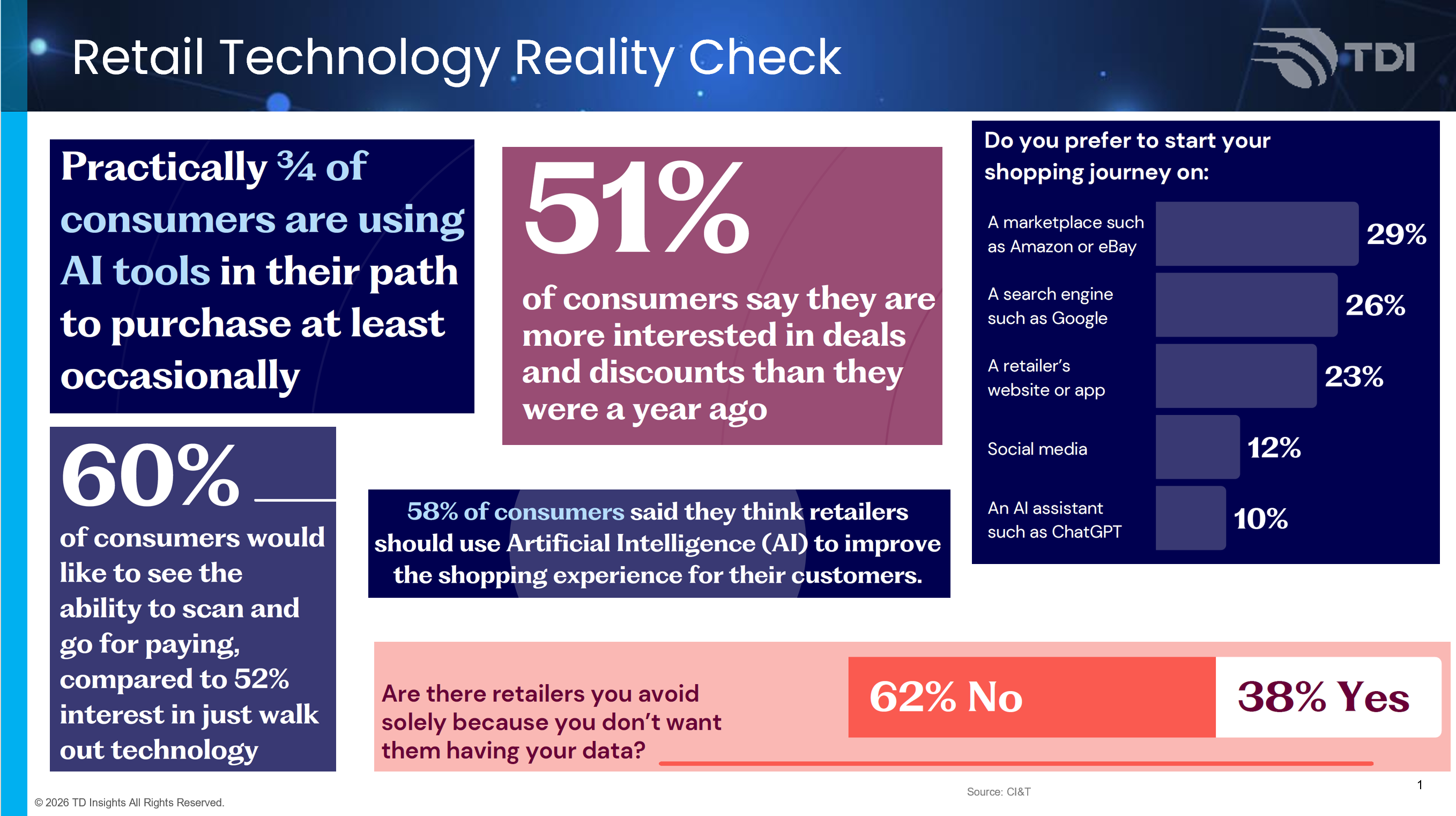
Highly encourage all of you to join us every year during RetailROI Super Saturday. It is the perfect place to start the NRF Big Show. Lots of insights from industry experts plus more importantly an opportunity to make a difference for vulnerable children around the world.
Foundational Usage of Retail AI Has Arrived
As IDC’s Filippo Battaini summarized in one of his NRF posts, “the technology foundation for AI-powered retail is solidifying - unified commerce platforms, edge computing, quality data architecture. But success will belong to retailers who start with the fundamentals: clean data, empowered associates, and connected systems.”
Fully agree that we are past the hype of the intensified adoption of Artificial Intelligence in retail. From a consumer point of view:
- 10% of respondents start their shopping journey with an AI assistant.
- 64% of respondents said they were interested in shopping with agentic AI after reading a description of it.
- Almost 75% of respondents use AI to shop at least occasionally.
- The most popular reasons respondents appreciate retailers using AI for their shopping experiences include saving them time (60%), making it easier to find products (56%) and helping them to discover new products (50%).
From a retailer point of view:
- Profit winners (2024 profits grew 10%+) that had already deployed AI for operational efficiency were 301% more likely to maintain profit leadership in 2025. Sales winners (2024 sales growth +10% or more) already deploying AI for efficiency were 87% more likely to maintain sales leadership.
- Retailers now dedicate an average of 15% of IT budgets to AI, with year-over-year AI spend rising by 27%. Retailers are reorienting technology budgets toward AI-enabled operations. Specific AI applications range from computer vision for inventory and shelf analytics, to predictive demand forecasting, to agentic task automation.
- Agentic AI is here. At NRF, “we heard from many retailers (Pandora, Warby Parker, 7-Eleven, Tecovas, Gap, Ulta, and more) on how they are applying these agents to real challenges. Pandora deployed a customer service agent (“Clara”) to handle peak-season demand, with ~60% of chats initially handled by the agent while maintaining service quality during the holidays. Under Armour uses Salesforce’s agentic tools to enable merchants to quickly update order management rules and other configurations.”
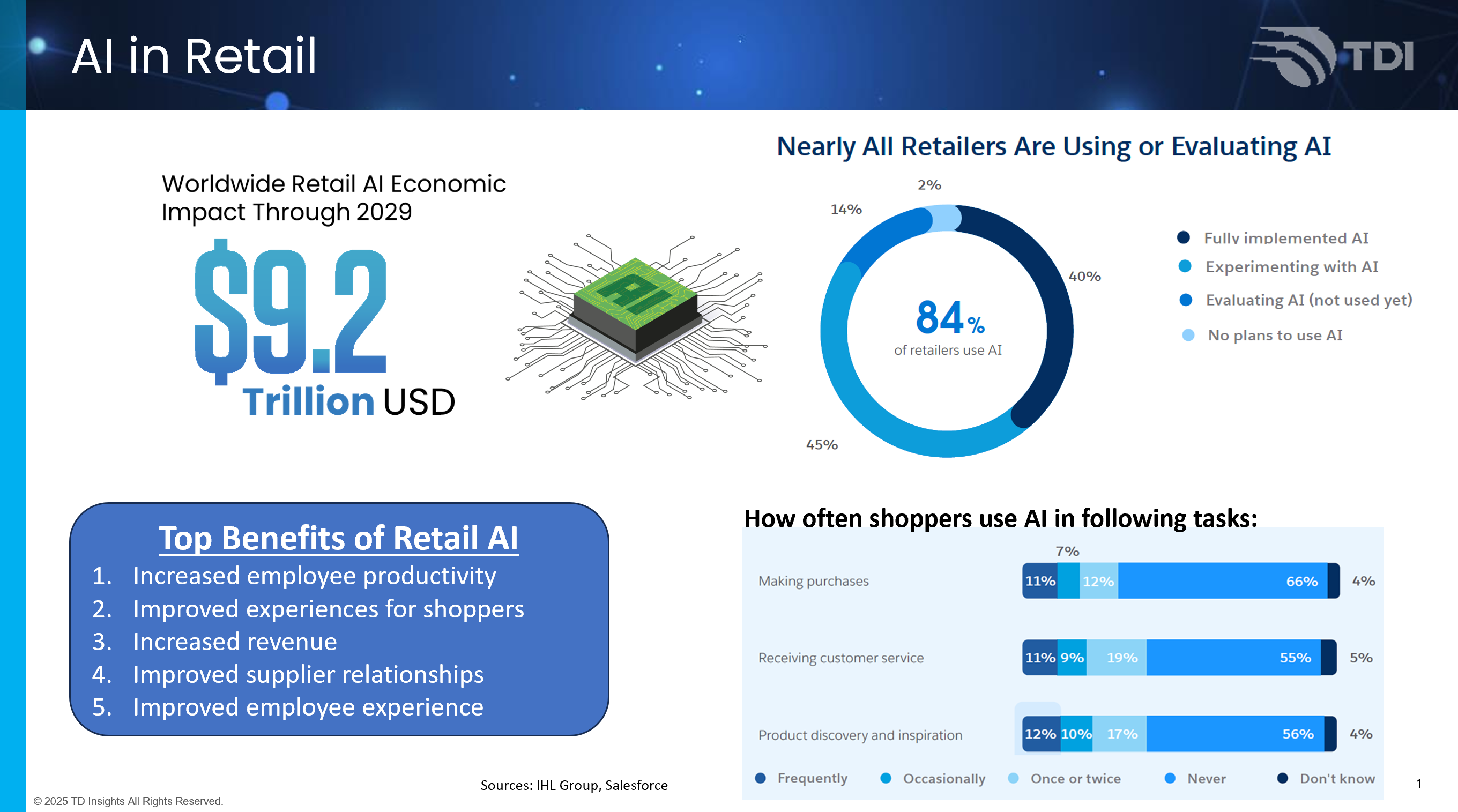
NRF 2026 had many examples showcasing how AI has moved from speculative experimentation to foundational, operational execution.
RFID Finds its Retail Groove
Remember all the hype around Amazon Go fully automated computer-vision-based stores? The reality end of this expensive experiment was reached this week when the company announced that it is closing all the remaining 15 stores.
At NRF 2026, Amazon pivoted the concept of Just Walk Out to Portable RFID Lanes. The new RFID-based solution is already installed in 360+ locations in five countries, including stadiums and hospitals. Lumen Field in Seattle increased total sales per game by 47%, BayCare's St. Joseph's Hospital in Florida reduced wait times from 25 minutes to 3 minutes, and UC San Diego served 11% more students while reducing retail theft by 83%.”
This interesting pivot brings more light on the growing importance of RFID. As IHL Services points out, retailers using RFID in 2025 claimed 56% higher sales growth on average than those without it.
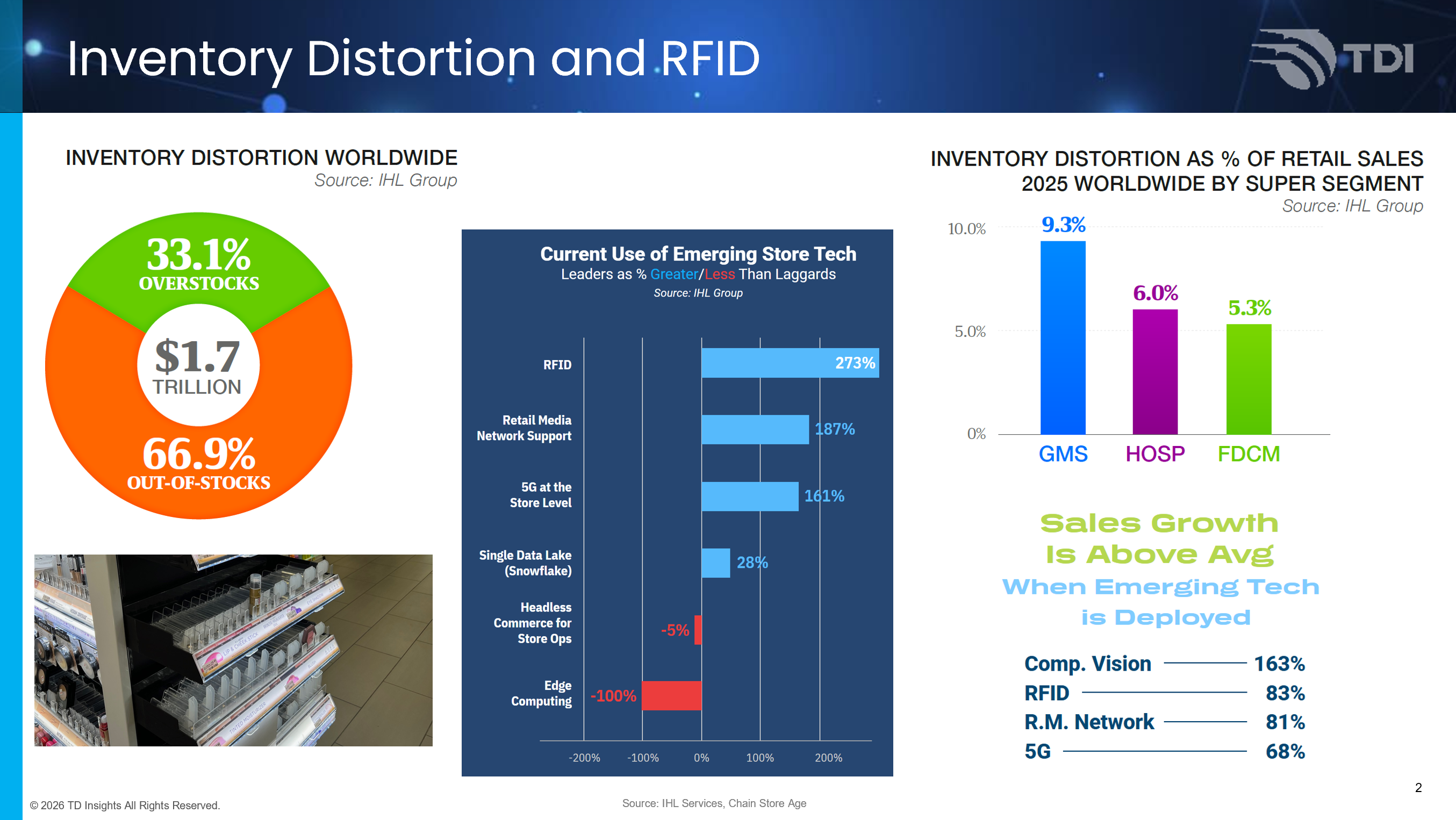
NRF 2026 had many other examples illustrating the growth of RFID. This 40+ year technology has finally found its groove.
The Loss Prevention NRF Big Show Evolution
The NRF 2026 edition of the Big Show was a major step forward for the increased importance of the loss prevention / asset protection function. Partly this is the consolidation of technologies in providing measurable benefits across the retail ecosystem including loss prevention.
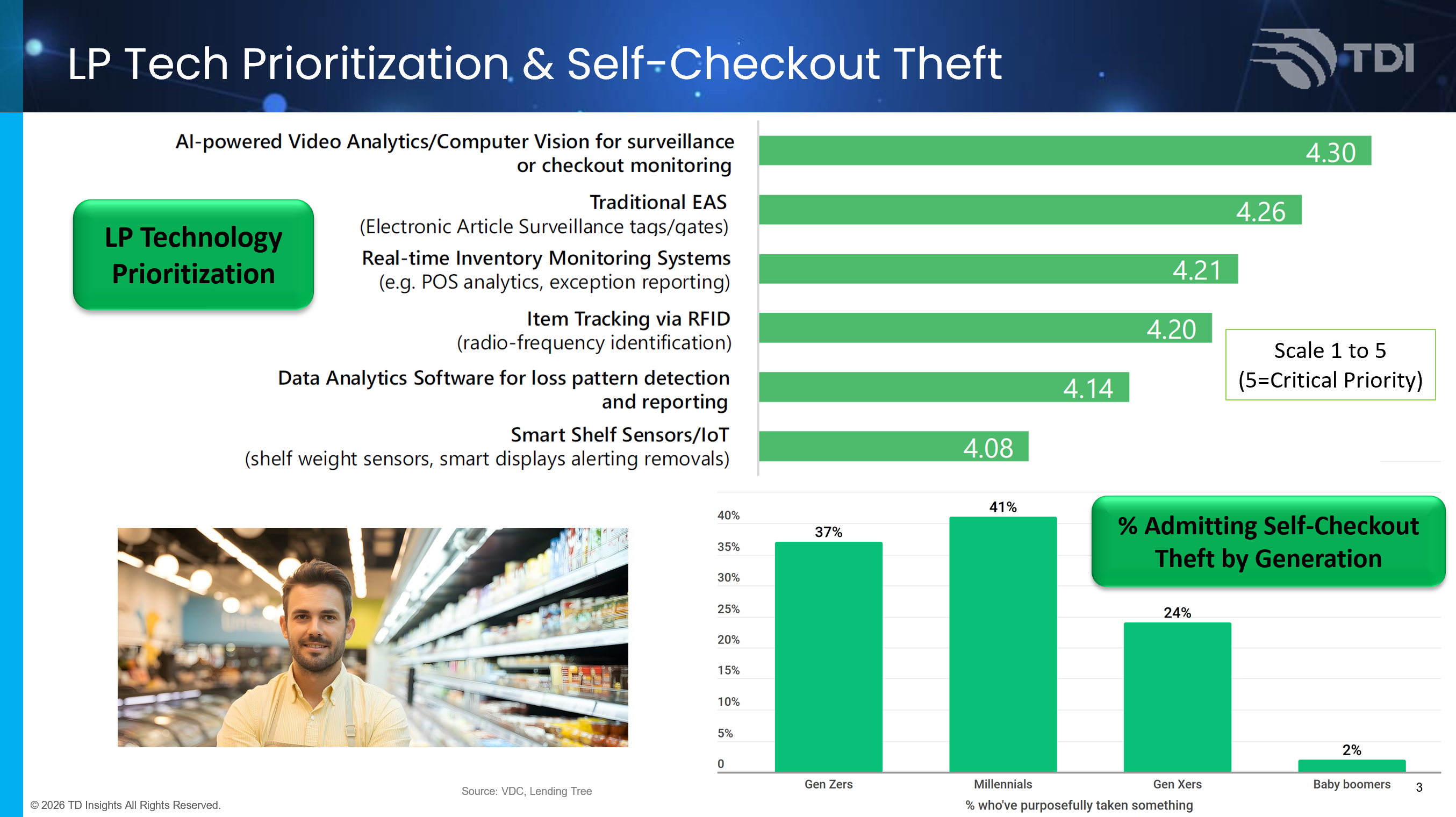
Note the common technology prioritization elements such as AI, RFID, real time inventory monitoring, data analytics, and smart-shelf sensors / IoT in loss prevention. Note also that deployments of new technologies such as self-checkout are leading to higher theft. Forty-one percent of millennials and 37% of Gen Zers admit to taking an item at self-checkout without scanning.
I had the pleasure of spending most of Tuesday with the NRF Loss Prevention Leadership Council. Interesting to hear was the shifting focus to Enterprise Security Risk Management (ESRM), a strategic approach in being an advisor and business enabler to the C-Suite on all security risks.
NRF 2026 showcased multiple new loss prevention technologies including computer vision virtual shopping baskets with no facial recognition, agentic AI LP analytics, RFID / AI enabled smart exits targeting Organized Retail Crime (ORC), and AI smart vision scanning integration.
New technologies introduce more complex risks. Truly believe that the loss prevention / asset protection function will step up to greater importance in the entire retail ecosystem.
Long Live the Physical Store
Contrary to all the hype just prior and during the pandemic, physical stores are not dying. As reported at NRF, in the United States, 83% of all retail purchases still happen in physical stores, despite decades of e-commerce growth.
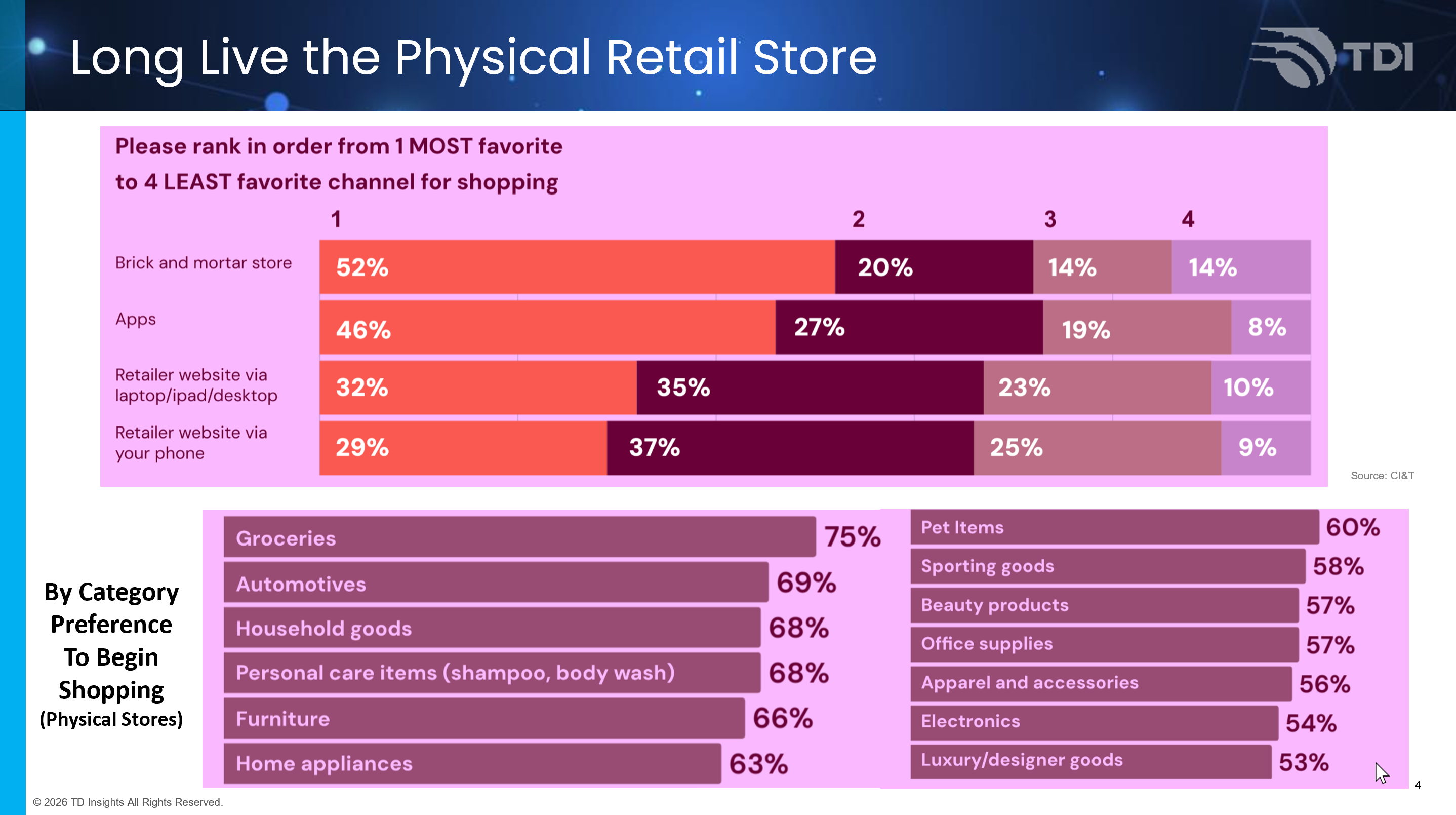
Younger generations are joining the physical store mantra with 63% of Gen Zers preferring to discover products in store. A favorite from NRF 2026 was hearing from the Chairman of Dick’s Sporting Goods reinventing immersive physical store experiences with the “House of Sports” where consumers can try on products.
The future is about “breaking down silos with cloud-based platforms and integrated data flows connecting POS, e-commerce, mobile, and social channels. This enables frictionless experiences—think buying online and picking up in-store—and lets teams respond quickly to customer needs, adjust prices, and run smarter promotions.”
The store will continue to be a pivotal component to the retail success formula. To thrive, it needs to evolve. Winners will focus on driving differentiated immersive consumer experiences on the endless quest of a greater harmonized omnichannel retail industry.
So much to learn, so little time. NRF 2026 was another reminder of the positive global future for the industry. Technology will be a disruptor, especially for those that focus on critically digitally empowering store associates to engage more effectively increasingly AI enabled consumers across the entire retail ecosystem. Happy new retail year.